Table of Contents Introduction What thread rolling is What thread
 Skip to content
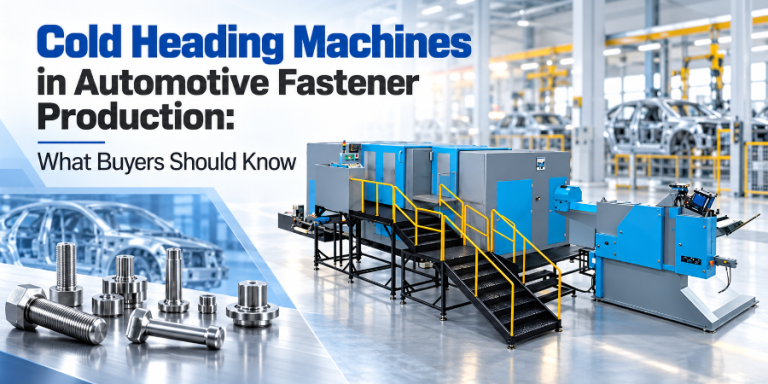
Reading time: ~9 min | Categories: Cold Forging Technology, Industrial Manufacturing
For procurement managers and production engineers in the automotive and industrial sectors, understanding the difference between standard machining and progressive cold header technology is critical to profitability. As global supply chains demand higher speed and lower waste, the move toward multi-station cold forming has become the industry standard for producing high-quality metal parts.
This guide breaks down the cold forging process, explores the mechanical benefits of net-shape manufacturing, and provides a clear framework for selecting the right equipment. All equipment references link to Dongrui cold forging equipment, engineered to match global precision standards for industrial fastener manufacturing and complex cold forging machine for automotive parts production.
Table of Contents
Cold forging is the process of shaping metal at room temperature using compressive force. Unlike cutting or grinding, which removes material, cold forging causes plastic deformation. This process improves the grain flow and structural integrity of the metal, making it ideal for high-stress applications.
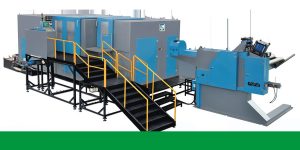
A progressive cold header is a specialized machine designed to perform multiple forming operations in a single cycle. It takes raw wire and moves it through several dies sequentially, with each stage refining the shape until it emerges as a finished or near-finished component.
The efficiency of how cold forging works lies in the transfer system. The wire is cut to a precise volume, then moved by transfer fingers through a series of stations—upsetting, extrusion, piercing, or trimming. Each station progressively transforms the geometry, ensuring the highest level of dimensional accuracy.
Compared to traditional lathe machining, multi-station cold forming significantly increases the parts-per-minute rate. By utilizing continuous production, manufacturers can reduce lead times and labor costs while maintaining high-volume output consistency.
Net-shape manufacturing is the ultimate goal in modern production. It produces parts so close to the final dimension that secondary machining is often eliminated, leading to cold heading machine benefits such as near-zero material waste and significant cost savings on expensive raw alloys.
The 6-station cold forging machine is widely considered the sweet spot for complexity. With six distinct stations, it offers the flexibility to produce sophisticated parts like stepped sleeve bushings, automotive pins, and specialized fasteners in one seamless operation.
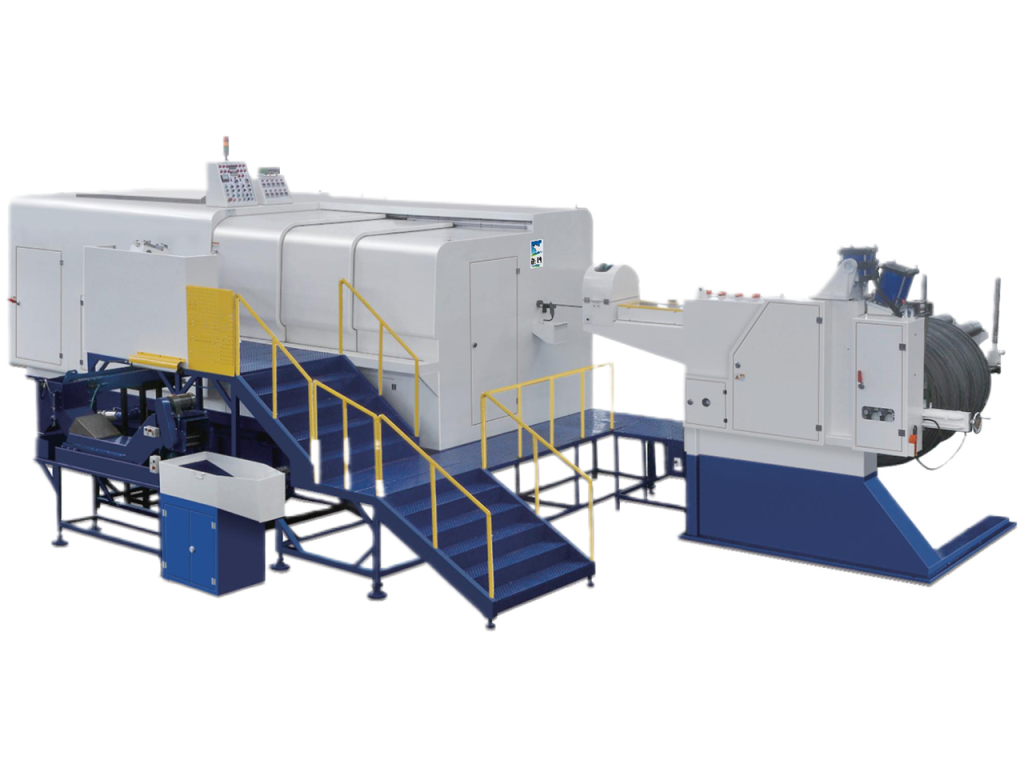
Choosing the right header depends on your specific part complexity. Whether you are producing standard fasteners or intricate components, matching the tonnage capacity and the number of stations is key to long-term profitability and high-precision net-shape forming capabilities.
While used machinery may seem affordable, modern machines offer advanced PLC integration, better energy efficiency, and superior reliability. Investing in current technology ensures you stay competitive against global manufacturing benchmarks.
Cold heading typically refers to the process of upsetting the end of a wire to form a head (like a bolt), while cold forming is a broader term encompassing multiple stages of shaping, including extrusion and trimming, to create complex parts.
Six stations allow for a sequence of operations that can produce intricate geometries—such as internal/external steps or hollow shapes—that fewer stations simply cannot achieve in one pass.
Carbon steels, alloy steels, stainless steels, and copper alloys are most common. The material must possess sufficient ductility to undergo plastic deformation without fracturing.
It minimizes raw material scrap and eliminates the need for secondary processes like CNC turning or grinding, which are time-consuming and labor-intensive.
Regular lubrication of the transfer system, monitoring ram stability, checking die wear, and ensuring hydraulic tonnage systems are calibrated are critical for machine longevity.
For high-volume production, yes. While CNC machining offers flexibility for low-volume, highly variable parts, cold forming provides superior speed, cost-efficiency, and structural strength for mass production.
Transfer systems move the workpiece precisely between dies. Modern servo-controlled transfer systems are critical for maintaining speed and alignment at high parts-per-minute rates.
It is based on the geometry. Each feature change (upset, extrusion, piercing) generally requires a dedicated station. A Dongrui engineer can analyze your part drawing to recommend the optimal station count.
New machines offer the latest technology in energy efficiency, safety, and precision. Rebuilt machines may be cheaper upfront but often lack the integration and productivity levels required for modern automotive standards.
Dongrui integrates rigid casting frameworks, advanced servo-transfer technology, and rigorous testing protocols to ensure every machine meets international tolerance standards.
Mastering the progressive cold header process is essential for any modern manufacturing facility looking to improve its bottom line. By prioritizing high-precision net-shape forming, your operation can achieve the consistency and efficiency required by today’s automotive and industrial markets.
Ready to Upgrade Your Cold Forging Line?
Consult with Dongrui’s engineering team to find the perfect 6-station solution for your parts. Let’s optimize your production efficiency today.
Request a Free Technical Proposal →
📧 Response within 24 hours | 🏭 30+ years of forging expertise | 🌍 Global support
Table of Contents Introduction What thread rolling is What thread
Table of Contents Introduction What smart cold forming actually means
1. Introduction In the highly competitive fastener manufacturing industry, efficiency,

Table of Contents Introduction What a cold heading machine is
 Optimized by Seraphinite Accelerator