Reading time: ~9 min | Categories: Cold Forging Technology, Industrial
 Skip to content
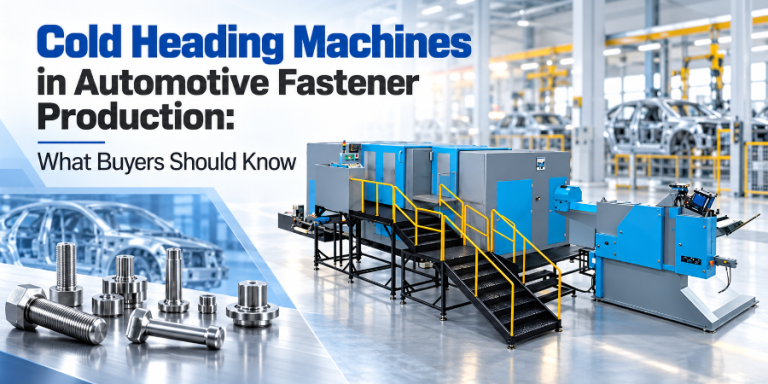
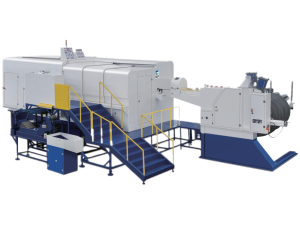
In the highly competitive arena of high-volume industrial fastener and component manufacturing, the machinery you choose is more than just a capital expenditure—it is the heartbeat of your operational efficiency. For decades, the 1/2″ National 500 5-die cold former has been heralded as an industry standard. However, as the global demand for net-shape manufacturing intensifies, plant managers are increasingly finding themselves at a crossroads: should they continue investing in used cold forging machinery, or is it time to upgrade to a state-of-the-art 6-station cold forging machine?
Table of Contents
To understand the current market, we must first respect the history. The National 500 series represents an era of robust, mechanical engineering. For many, these machines were their first entry into multi-station cold forging. They were built to last, often operating for decades. However, the manufacturing landscape has shifted dramatically. Today’s requirements for high-precision cold forming require levels of digital oversight and material consistency that legacy machines were never intended to provide. Manufacturers are no longer just making simple bolts; they are creating intricate, safety-critical components that demand absolute process control.
On paper, browsing used cold forging machinery listings seems like an exercise in cost-saving. You see a rebuilt cold header, and you calculate the price against your immediate production needs. But this is where the cold forging equipment ROI often gets miscalculated. The hidden costs are multifaceted:

The transition from a 5-die to a 6-station cold forging machine is not just about adding an extra station; it is about expanding the geometric possibilities of your parts. Modern machines are designed as a progressive forming machine, allowing for more complex operations in a single pass. By adding that sixth station, manufacturers can perform finishing operations—such as precision trimming, pointing, or threading—that would otherwise require secondary operations, thereby slashing production time, labor costs, and floor space usage.
While industry giants have established high benchmarks with Formax Plus technology, Dongrui has leveraged similar advanced engineering principles to bring high-end performance to a wider market. Our machines incorporate dynamic tonnage monitoring, a critical feature that provides real-time data on the forming force at each station. This data-driven approach allows for:
One of the most significant upgrades in our high-speed cold header lines is the integration of a servo-driven transfer system. Older, cam-driven machines are limited by the rigid mechanical timing of their transfer fingers. In contrast, servo-driven systems allow for independent timing adjustments for each station. This flexibility reduces vibration, prevents surface marking on delicate parts, and allows for the seamless processing of complex geometries at significantly higher speeds.
When you invest in a new Dongrui machine, you aren’t just buying steel and iron; you are buying uptime. A rebuilt cold header might cost 30% less upfront, but if it experiences only one major breakdown a year that results in a week of downtime, the production loss will quickly eclipse those savings. When you factor in the energy efficiency of modern motors, the reduced scrap rate from dynamic tonnage monitoring, and the reliability of modern components, the cold forging equipment ROI for a new machine becomes undeniably superior over a 5-year production cycle.
We understand that upgrading a production line is a daunting task. That is why our machines are designed for seamless integration. Whether you are replacing a single inefficient 5-die cold former or outfitting a complete new facility, our engineering team provides the technical support needed to ensure that your new 6-station cold forging machine operates at peak capacity from day one. We offer detailed site assessments, installation training, and ongoing technical support to ensure your transition is as smooth as possible.
The manufacturing industry never stands still. While your legacy machines may have served you well in the past, the future of your company depends on the efficiency, precision, and reliability of your current equipment. By upgrading from an aging used cold forging machinery setup to a modern, high-performance 6-station cold forging machine, you are securing your position as a high-quality supplier in the global market.
Are you ready to stop repairing the past and start building the future? Explore our latest technical specifications on our 6-Station Cold Forging Machine page, or contact Dongrui today for a professional consultation tailored to your specific production requirements.
Reading time: ~9 min | Categories: Cold Forging Technology, Industrial
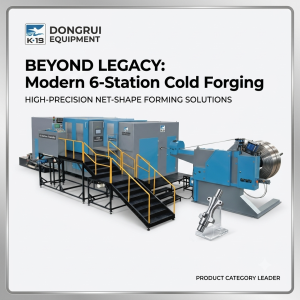
1. Introduction In the world of high-speed metal forming, names
1. Introduction In the highly competitive fastener manufacturing industry, efficiency,
Table of Contents Introduction Die anatomy Material selection between carbide
 Optimized by Seraphinite Accelerator