1. Introduction For decades, “Made in China” in the machinery
 Skip to content

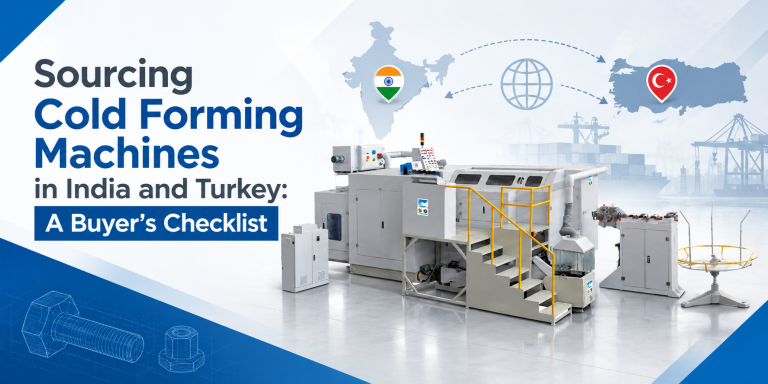
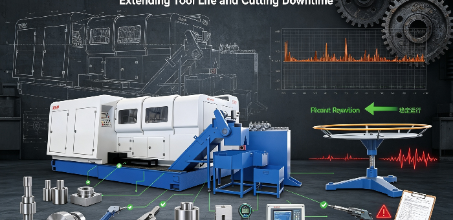
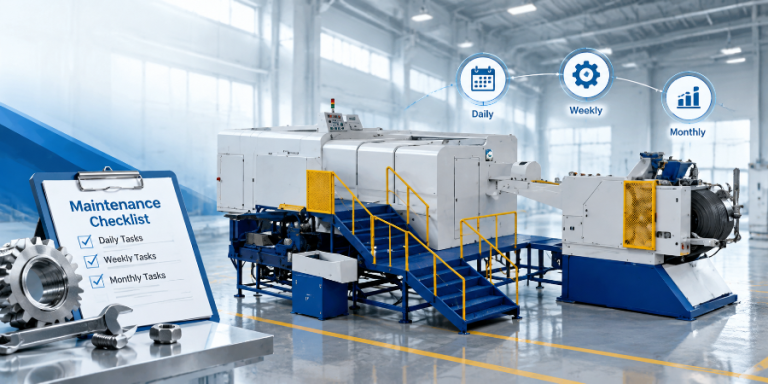
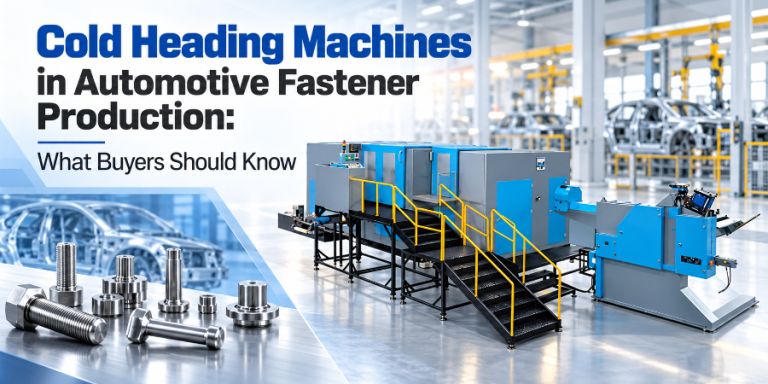

A hex bolt with a plain head can be made in a handful of operations, and a single station header handles that work without trouble.Multi station cold forming exists to remove that gap. By laying several forming steps in sequence inside one frame, the machine turns a cut wire blank into a finished complex part in a single continuous pass. This article explains what the station count actually means, where each configuration earns its place, and how to set the count by the part rather than by habit.
A station is one position in the machine where a punch and die perform a single deformation, usually one blow. The wire is cut to length at the first station, then carried forward by a transfer system so each later station adds one more feature. A four station machine might cut, head, extrude, and trim. A fifth station can add necking or a second head diameter, and a sixth can form a rivet tail or a complex contour. The logic is progressive, so the metal is moved a little at each step instead of being forced all at once. That sequential reduction is what lets hard wire become a shaped part without cracking the surface or overloading the tool.
The first gain is that a complex part leaves the machine in one pass, with no removal to a second process between forming steps. The second is cycle stability, because every station fires on the same timed stroke, so output stays uniform across a long run. The third is less post processing, since the part leaves closer to finished and needs less turning or milling afterward. Together those three properties raise overall equipment effectiveness and shrink the labor and handling cost that multi step parts normally carry.
A standard hex bolt or screw with one head diameter is a light forming job. Two or three active stations cover cut, head, and trim, and adding more stations would only lengthen the machine without adding value. The point of extra stations is not speed for plain parts. It is the ability to stack features that a simple part does not have.
Flange bolts, necked studs, double diameter pins, and rivet style fasteners each need more than one shaped blow. A flange adds material spread at the head, necking reduces the shank in a controlled zone, and a rivet tail needs a final forming step that a bolt never requires. These parts are where four stations start to fall short and five or six become the practical choice, because each feature wants its own calm reduction rather than a forced combined stroke.
Some lines run several part families and cannot justify a dedicated machine per configuration. The DBHP-6 high speed cold former is built with forging stations 4, 5, and 6 in a switchable layout, so the same frame serves simpler and more complex parts by changing the active station count and tooling. For a shop moving between standard M6 fasteners and shaped variants, that flexibility removes the need to buy two headers for one diameter range.
The machine is only as good as the blank it receives and the alignment of its tools. Feed accuracy decides whether each station sees the same wire length, and any drift shows up as a short part two stations later. Die alignment across stations must hold within tight tolerance, because a small offset multiplies as the part advances. The third limit is the setup window, the time to change punches, dies, and transfer timing when a part switches. A six station changeover is longer than a two station one, so the configuration pays back only when the run is long enough to cover it.
A single station former is cheaper to buy and faster to set for one simple feature, and it suits low mix shops that rarely leave the plain bolt envelope. A multi station former costs more and takes longer to tool, but it makes complex parts in one pass at a stable high cycle, with far less handling and secondary machining. On a part that needs three or more formed features, the multi station line usually wins on landed cost once volume clears the setup burden. The comparison is therefore less about the machine and more about how many features the part truly carries.
Flange bolts and washer faced fasteners are standard parts with one extra feature, and they sit naturally on four or five stations. Because the feature is consistent and the volume is high, the progressive setup pays for itself every shift, and the part leaves ready for thread rolling without an intermediate operation.
Suspension and brake hardware, sensor mounts, and shaped pins carry shoulders, necks, and formed ends that a single station cannot produce. These are the parts that justify six stations, because the combination of features and the grade of steel leave no room for a forced single blow. Automotive supply chains standardize on multi station formers for exactly this reason, where repeatability matters as much as the feature set.
The honest boundary is very low volume mixed work. If a shop changes part family every few hundred pieces, the six station changeover time eats the cycle gain, and a simpler or outsourced route is cheaper. Multi station formers reward long, stable runs, and forcing them into short mixed batches only raises cost per piece.
Output is protected at the edges of the process. Feed calibration keeps every blank the same length, so no station works an uneven load. Quick changeover systems, pre set tooling cassettes, and rehearsed transfer timing cut the setup window that otherwise kills the economics. Cycle matching matters too, because the fastest station sets the line rate, and a bottleneck at one position drags the whole machine down. Hold those three and the rated pieces per minute stays real across the run.
Station count is not a spec to maximize. It is a match to part complexity, because each added station earns its place only when the part carries one more feature that needs its own calm reduction. For M6 work that swings between standard and shaped parts, the DBHP-6 high speed cold former with its switchable 4, 5, and 6 stations keeps one frame covering both. The DBHP-8 carries the same multi station logic to M8 at 350 pieces per minute, while the DBP-206L six station part former extends it to 12 to 20 mm at up to 220 mm length for the most complex non standard bodies.
It is a cold heading machine that performs several forming blows in sequence, each at its own station, so a cut wire blank becomes a complex part in one continuous pass. The transfer system moves the part forward between stations on a fixed stroke, which keeps the cycle stable and the features consistent.
Count the formed features the part must carry beyond cut and head. One extra feature such as a flange fits four or five stations, while a neck plus a rivet tail or a second diameter usually needs six. Add a station only when the part has a feature that justifies its own reduction, not for headroom you will not use.
Yes. The DBHP-6 is built with forging stations 4, 5, and 6 in a switchable layout, so the active station count and tooling change to suit the part. That lets one M6 class machine serve both plain fasteners and shaped variants without a second header.
The cycle rate per machine is similar, because both fire on a timed stroke. The speed gain comes from making the whole part in one pass instead of moving it to a second machine and a handling step. On a multi feature part, that removes the between process time and the extra labor, which is where the real saving appears.
Only when the run is long enough to cover the changeover. Six station tooling takes longer to set than a simple header, so very short mixed batches can cost more per piece than a simpler or outsourced route.
1. Introduction For decades, “Made in China” in the machinery
Table of Contents Introduction Material utilization: cold forming achieves 90–95%
Table of Contents Introduction What Automotive Fasteners Need and Why
Table of Contents Introduction What Defines Standard vs Non-Standard Bolts
 Optimized by Seraphinite Accelerator