1. Introduction Walk into any fastener manufacturing facility and you
 Skip to content
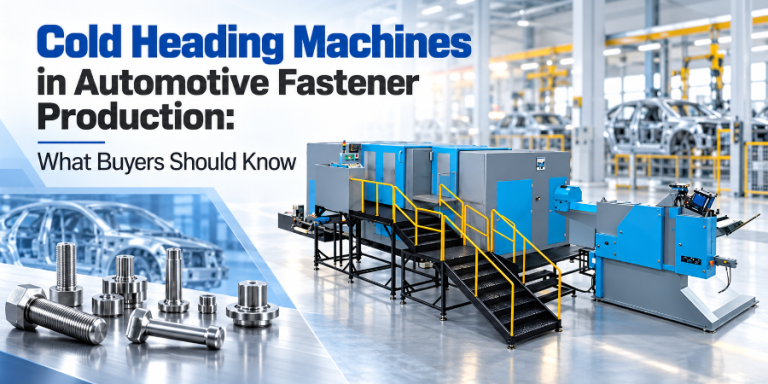
A finished bolt sitting in a bin looks simple. But between the steel mill’s wire coil and that final plated fastener lies a carefully orchestrated six-stage production process — each stage dependent on the previous one, each requiring specific equipment, and each contributing to the part’s final dimensional accuracy, mechanical strength, and surface quality.
Manufacturers setting up a new fastener production line — or upgrading an existing one — often focus on the cold heading machine as the centerpiece. That’s understandable: it’s the most capital-intensive unit and the one that directly determines part geometry. But treating the cold former in isolation leads to bottlenecks downstream. A 450 pcs/min DBHP-6 cold former is only productive if the upstream wire drawing delivers consistent diameter and the downstream thread roller can keep pace.
This guide walks through all six stages of a complete fastener production line — from inline wire drawing through descaling, lubrication, multi-station cold heading, thread rolling, heat treatment, and surface finishing. For each stage, we cover the equipment involved, the key process variables, and how to match capacity across the line. We also provide an equipment sizing guide that maps wire diameter, part size, and throughput to specific machine models.
Table of Contents
A standard cold-heading fastener production line consists of the following stages, arranged in sequence:
| Stage | Process | Purpose | Equipment |
|---|---|---|---|
| 1 | Wire Drawing & Descaling | Reduce coil rod to target diameter; remove scale | Wire drawing machine, descaling unit |
| 2 | Straightening & Lubrication | Straighten wire; apply phosphate + soap coating | Straightener, phosphate coating tank |
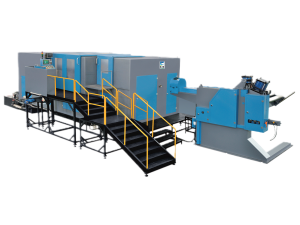
| 3 | Cold Heading / Multi-Station Forming | Form head, shank, and geometry from wire blank | Multi-station cold former (bolt former / part former) |
| 4 | Thread Rolling | Form external threads on the shank | Flat die or planetary thread roller |
| 5 | Heat Treatment | Achieve target mechanical properties (Grade 8.8/10.9/12.9) | Quench & temper furnace line |
| 6 | Surface Treatment | Corrosion protection and final appearance | Zinc plating, galvanizing, or phosphating line |
The critical principle of production line design is capacity matching: every stage must be able to process parts at least as fast as the slowest stage in the line. If the cold former produces 450 blanks per minute but the thread roller can only handle 300, the thread roller becomes the bottleneck — and the cold former’s capacity is wasted. Let’s examine each stage in detail.

The fastener production journey begins with wire rod coils from the steel mill — typically 5.5mm to 22mm in diameter, depending on the final fastener size. This raw wire rod arrives with mill scale (iron oxide) on its surface and a diameter that is usually larger than what the cold heading machine requires.
Wire drawing pulls the coil through a series of progressively smaller drawing dies to reduce the diameter to the exact size needed for cold heading. The wire is drawn through a lubricant (usually a dry soap powder) that reduces friction and prevents galling between the wire and the die. Each drawing pass reduces the diameter by 10–25%, depending on the material grade.
Key process variables:
In an inline production line, the wire drawing machine feeds drawn wire directly into a payoff reel that supplies the cold former. This eliminates intermediate coil handling and reduces floor space. For smaller operations or multi-product lines, wire may be drawn separately and stored on carriers.
The drawn wire diameter is typically 2–5% below the final part’s nominal shank diameter. This accounts for elastic springback after the cold heading extrusion step and ensures the finished shank meets the specified dimensional tolerance.
After drawing, the wire still retains some curvature from the coil. Before it enters the cold heading machine, it must be straightened and coated with a lubricant layer that enables clean metal flow during the forming process.
Straightening is achieved by passing the wire through a series of adjustable rollers (typically 5–7 rolls) arranged in alternating planes. The rolls are set to slightly over-bend the wire in the opposite direction of its natural curvature, producing a straight length suitable for precise cutoff in the cold former.
Lubrication — phosphate coating: For carbon steel fasteners, the most common lubrication system is a zinc phosphate conversion coating followed by a sodium soap lubricant. The phosphate layer reacts with the steel surface to form a crystalline coating that acts as a carrier for the soap. Together, they provide:
For stainless steel and alloy fasteners, which are more prone to galling, molybdenum disulfide (MoS₂) based lubricants may be used as an alternative or supplement to phosphate coating.
Practical Tip
Lubrication quality directly affects die life. Poor or inconsistent phosphate coating can reduce carbide die life by 30–50%. Monitor coating weight (typically 5–15 g/m²) and soap film thickness as part of your process control plan.
This is the core stage of the production line — where straight, lubricated wire is transformed into a shaped fastener blank with a head, shank, and any intermediate geometry. The cold heading machine (also called a cold former or bolt former) performs this through a sequence of punch and die operations across multiple stations.
Here’s how a multi-station cold former works:
Station count matters. The number of stations determines what geometries the machine can produce:
The choice between a bolt former (designed for standard bolt shapes) and a part former (designed for non-standard and complex geometries) depends on your product mix. If you primarily produce standard hex bolts, a dedicated bolt former like the DBF-134L will deliver higher throughput at a lower cost. If your portfolio includes specialty or custom parts, a 6-station part former like the DBP-136L offers the flexibility to handle both standard and non-standard work on the same machine.
After cold heading, the bolt blank has a head and shank but no threads. Thread rolling forms the external threads by pressing the blank between two flat dies (or cylindrical rollers) with thread-shaped grooves. The dies displace metal rather than removing it — making thread rolling a chipless forming process that produces stronger threads than cutting.
Two main thread rolling methods:
| Method | How It Works | Speed | Best For |
|---|---|---|---|
| Flat Die Rolling | Blank placed between two flat reciprocating dies; one die is stationary, the other moves linearly | 150–400 pcs/min | Standard bolts M3–M20; high-volume production |
| Planetary (Cylindrical) Rolling | Blank fed between a stationary internal die ring and rotating cylindrical dies | 300–800 pcs/min | Very high-volume standard threads; M3–M12 |
Why rolled threads are stronger than cut threads: Because thread rolling displaces metal rather than removing it, the thread’s grain structure follows the thread profile rather than being interrupted. The thread roots are also work-hardened during rolling, increasing surface hardness and improving fatigue resistance. This is why rolled-thread fasteners are preferred for high-strength applications (Grade 8.8, 10.9, 12.9).
Thread rolling must be matched to the cold former’s output. A common configuration is to run the thread roller at 1.2–1.5x the cold former’s output rate to provide a buffer for intermittent blank feeding and to allow brief stoppages without stopping the heading line.
Cold-formed fasteners made from medium-carbon or alloy steel must undergo quench and temper (Q&T) heat treatment to achieve the mechanical properties specified by strength grades such as 8.8, 10.9, and 12.9. The work hardening from cold heading alone is not sufficient to meet these elevated strength targets.
The Q&T process consists of three steps:
| Grade | Min. Tensile Strength | Typical Material | Tempering Temp |
|---|---|---|---|
| 8.8 | 800 MPa | Medium carbon steel (Ck35, SWRCH35K) | 520–580°C |
| 10.9 | 1,000 MPa | Low alloy steel (SCM435, 42CrMo4) | 480–540°C |
| 12.9 | 1,200 MPa | Low alloy steel (SCM440, 42CrMo4 with higher C) | 420–480°C |
Heat treatment is typically performed in a continuous mesh-belt furnace line that handles high volumes of fasteners in bulk. Parts are loaded onto a mesh belt that passes through the austenitizing zone, quench bath, wash station, tempering furnace, and cooling zone in sequence. A typical throughput is 200–1,000 kg/hour depending on furnace size.
Not all fasteners require heat treatment. Low-carbon steel fasteners (Grade 4.6, 4.8) achieve their properties through cold working alone and skip this stage entirely. Stainless steel fasteners (A2-70, A4-80) may require solution annealing rather than Q&T.
The final stage applies a corrosion-resistant coating to the finished fastener. The choice of surface treatment depends on the application environment, the required corrosion resistance, and any industry-specific standards.
Common surface treatments for fasteners:
After surface treatment, fasteners may undergo a final topcoat application (e.g., a torque-tension modifier for automotive bolts) and a batch inspection for dimensional accuracy, thread gauging, mechanical properties, and coating thickness before packaging and shipment.
Selecting the right cold heading machine for your production line depends on three primary factors: wire diameter (part size), required throughput (pcs/min), and part complexity (station count). The following table maps Dongrui’s machine lineup to typical production scenarios:
| Model | Stations | Part Dia. | Max Length | Output Rate | Motor | Weight | Best For |
|---|---|---|---|---|---|---|---|
| DBHP-6 | 4/5/6 | M6 | — | 450 pcs/min | — | — | High-volume M6 standard bolts |
| DBHP-8 | — | M8 | — | 350 pcs/min | — | — | High-volume M8 standard bolts |
| DBF-134L | 4 | 8–12.7mm | 160mm | 75–110 pcs/min | 37 kW | 28 t | Standard bolts M8–M12 |
| DBP-136L | 6 | 8–12.7mm | 160mm | 60–90 pcs/min | 45 kW | 35 t | Standard & non-standard parts M8–M12 |
| DBP-206L | 6 | 12–20mm | 220mm | 40–70 pcs/min | 90 kW | 80 t | Large-diameter bolts & parts M12–M20 |
Sizing considerations:
Quick Selection Guide
→ M6 high-volume standard bolts: DBHP-6 (450 pcs/min)
→ M8 standard bolts: DBHP-8 (350 pcs/min)
→ M8–M12 standard bolts: DBF-134L (75–110 pcs/min, 4 stations)
→ M8–M12 standard + non-standard parts: DBP-136L (60–90 pcs/min, 6 stations)
→ M12–M20 large bolts & parts: DBP-206L (40–70 pcs/min, 6 stations)
For standard M8 hex bolts in carbon steel, a 4-station machine like the Dongrui DBF-134L is typically sufficient. The four stations handle cutoff and initial upset, pre-form (shank reduction), final heading, and trimming. However, if you produce M8 bolts from stainless steel, or with complex head geometries (flange, socket, etc.), a 5- or 6-station machine like the DBHP-8 or DBP-136L will distribute deformation more progressively, reducing per-station stress and improving die life.
Yes, but with limitations. A cold former’s cutoff diameter range determines the wire sizes it can process. For example, the DBF-134L handles 8–12.7mm, meaning it can produce M8, M10, and M12 bolts on the same machine — but not M6 or M16. Changing between sizes within the machine’s range requires a die and tooling change, which typically takes 2–6 hours depending on the machine configuration and operator experience. For frequent product changeovers, consider quick-change tooling systems and standardize on wire diameters that minimize changeover frequency.
Practical cold heading typically starts at around 2mm wire diameter for very small screws and rivets. Below this, wire feeding, cutoff, and transfer become mechanically challenging due to the precision required. Most standard bolt production uses wire in the 3–20mm range. The Dongrui DBHP-6 is designed for M6 fasteners (approximately 5.5mm wire), while the DBP-206L handles up to 30mm cutoff diameter for M20 fasteners.
Floor space depends on machine size and the number of process stages included. A typical line for M8–M12 bolts — including wire drawing, cold heading, thread rolling, heat treatment, and zinc plating — requires approximately 200–500 m². The cold former itself is the largest single unit: the DBF-134L measures 10,000 × 3,800 × 2,900 mm, while the DBP-206L measures 14,500 × 6,000 × 3,100 mm and weighs 80 tons, requiring a reinforced foundation. Additional space is needed for wire storage, finished goods inspection, packaging, and maintenance access around the equipment.
No. Low-carbon steel fasteners (Grade 4.6, 4.8) achieve their required mechanical properties through cold working (work hardening) alone and do not require quench and temper heat treatment. However, medium-carbon and alloy steel fasteners for structural, automotive, or high-strength applications (Grade 8.8, 10.9, 12.9) must undergo heat treatment to develop the martensitic structure required for their specified tensile and yield strengths. Stainless steel fasteners may require a different thermal treatment — solution annealing — depending on the grade and application.
Building a complete fastener production line is an exercise in systems integration. Each of the six stages — wire drawing, straightening and lubrication, cold heading, thread rolling, heat treatment, and surface treatment — must be specified not only for its individual function but also for its capacity to keep pace with the rest of the line.
The key takeaways for line design:
Dongrui offers a complete range of cold heading machines and part formers covering M6 through M20 fasteners — from the high-speed DBHP-6 (450 pcs/min) to the heavy-duty DBP-206L (12–20mm). As a National High-Tech Enterprise with exports to 145+ countries, our engineering team can help you size the right equipment for your production requirements.
Planning Your Fastener Production Line?
Tell us your part specifications, wire diameter, and annual volume. Our engineers will recommend the optimal machine configuration and complete production line layout.
1. Introduction Walk into any fastener manufacturing facility and you
Reading time: ~8 min | Categories: Cold Forging Technology, Industrial
1. Market Growth and Scale In 2026, the global cold
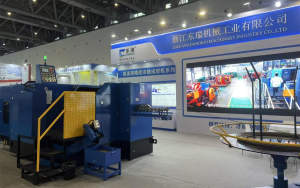
Dongrui Machinery Unveils Multi-Station Cold Heading Equipment at the 2026
 Optimized by Seraphinite Accelerator