
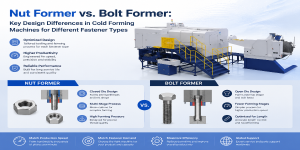
1. Introduction Walk into any fastener manufacturing facility and you
 Skip to content

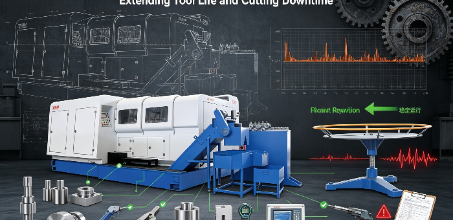



In a cold heading cell, the machine is the frame and the drive, but the dies are the consumable heart of the process. Every part that leaves the press passes through a set of tools that is simultaneously shaping the metal and wearing against it. The way those tools are designed and maintained decides two things at once: the quality of the fastener and the cost per part.For a plant running at several hundred pieces per minute, die life is not a maintenance footnote. It is a direct line on the profit and loss statement, because every unplanned die change stops the line and every premature failure adds scrap.
A heading station uses a small set of tools that each carry a distinct load. The main die, sometimes called the header die, holds the wire and shapes the body of the head. The punch descends to form the underhead surface and to drive the metal into the die cavity. The cutoff die sizes the wire blank before it is transferred, and knockout or ejector pins push the finished part free.
In a multi-station former, transfer dies carry the part between stations, so the tooling count grows with each added position. The main die and the punch see the highest stress, because they absorb the full forging load on every stroke. When cold heading die design is done well, each tool is matched to the load it carries rather than built from a single standard recipe.
The first material decision is carbide or tool steel. Tungsten carbide, a composite of tungsten carbide grains in a cobalt binder, offers very high hardness and wear resistance, which is why it is the usual choice for the main die in high-volume work. The cobalt content sets the grade: more binder gives more toughness but less wear resistance, while less binder does the reverse.
Tool steel, often a high-speed or hot-work grade, is chosen where impact and toughness matter more than pure wear life, such as for punches that take repeated shock. The art of carbide die grades is matching the binder level and the geometry to the wire, the part shape, and the forging force, because a die that is too brittle will chip and one that is too soft will wear out fast.
A thin coating on the die surface changes the interaction between steel and tool. Titanium nitride, the familiar gold layer, lowers friction and improves wear resistance on many carbon steel jobs. Titanium aluminum nitride performs better at the higher interface temperatures that come with fast cycling, and it is a common pick for aluminum and other sticky alloys. Chromium nitride brings corrosion resistance and is useful when forming stainless wire that tends to gall.
These layers do not make a weak die strong, yet they reduce material pickup, slow the onset of wear, and quiet the friction that drives heat. A modest coating investment often pays back through longer cold forming tooling life and fewer surface defects on the part.
Geometry carries as much weight as material. A generous fillet radius at the head-to-shank transition spreads the stress that would otherwise concentrate at a sharp corner, and that corner is exactly where a die cracks first. A slight draft or taper on cavity walls helps the part release instead of binding, while the land length and clearance control how the metal flows and where it first contacts the tool.
Cutoff and transfer geometry matter too, because a blank that is the wrong length or off center loads the die unevenly on the next stroke. Cold heading die design therefore treats the whole tool set as one system, since a small error in one dimension can shorten the life of every other part.
The decision between reconditioning and replacement turns on the nature of the damage. Wear that stays within limits, such as a slightly enlarged cavity or minor edge rounding, is a candidate for reconditioning, which restores the surface and brings the tool back into service. A crack, a severe chip, or a dimension that has drifted out of tolerance calls for replacement, because those defects do not regrind away.
The economic test is straightforward. If reconditioning returns the die to spec for a fraction of the replacement cost and the downtime is planned, it is the right move. If the tool would need repeated fixes or still fall short of tolerance, a new die is cheaper in the long run.
A sound reconditioning cycle starts with disassembly and inspection. Magnetic particle or dye penetrant testing reveals cracks that the eye cannot see, and only a crack-free die advances. The cavity is then reground or re-honed to remove the worn layer, the surfaces are lapped to finish, and a fresh coating is applied where the process calls for one.
Shops track the interval by parts count or by accumulated tonnage rather than by calendar time, because a hard wire wears a die faster than a soft one regardless of the date. Logging each reconditioning keeps the cold forming tooling life visible and turns the die crib from a mystery into a managed inventory.
Die life depends on more than the tool itself, because the machine that holds the die sets the conditions it sees. A rigid frame and precise guidance keep the punch and die centered, so the forging load spreads evenly across the die face instead of spiking at one edge. Deflection or misalignment concentrates stress and fractures even a well-made die ahead of schedule.
This is the same upstream discipline we examined when looking at how cold heading pairs with thread rolling, where the net-shape blank prepared by the former sets the conditions the downstream tooling meets. The high forging forces of modern formers, such as 300,000 kgf on a compact machine or 400,000 kgf on a larger one, are only useful when the structure behind them is stiff enough to deliver that force without flex. Rigidity is therefore a die-protection feature as much as a speed feature.
Die performance is engineered, not accidental. The right carbide grade, a coating matched to the wire, and geometry that respects stress concentration together decide how long a tool runs. Reconditioning on a parts or tonnage basis keeps the die crib under control, and machine rigidity quietly protects every tool in the set.
Carbide is the usual choice for the main die in high-volume work because of its wear resistance, while tool steel is preferred for punches that take impact. The right mix depends on the part and the wire.
By parts count or tonnage rather than time, with the limit set by the wear the specific material causes. Hard wire shortens the interval, and logging each cycle keeps it predictable.
No. A crack means the die is replaced, because grinding cannot remove it and the defect will grow under load. Reconditioning applies only to wear.
Misalignment, an undersized fillet, the wrong carbide grade, galling from poor lubrication, and uneven blank length are the usual causes, and most trace back to setup rather than the tool.
A rigid, well-aligned machine spreads the load evenly and prevents edge stress that fractures dies, so frame stiffness is a direct contributor to tooling life.
Zhejiang DongRui builds high-speed cold formers whose rigid frames and high forging forces support long tooling life, including the DBHP-6 at 300,000 kgf and up to 450 parts per minute for M6, the DBHP-8 at 400,000 kgf and 350 parts per minute for M8, and the DBF-134L at 120,000 kgf for bolts from 8 to 12 mm in diameter.
1. Introduction Walk into any fastener manufacturing facility and you
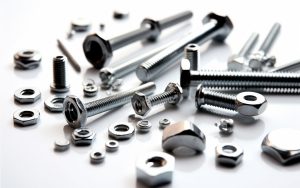
1. Market Growth and Scale In 2026, the global cold
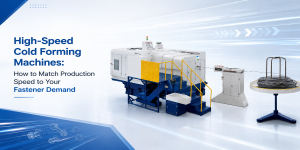
1. Introduction When evaluating cold forming machines, the first number
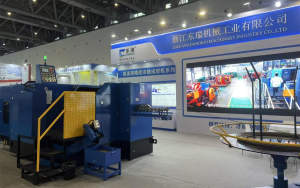
Dongrui Machinery Unveils Multi-Station Cold Heading Equipment at the 2026
 Optimized by Seraphinite Accelerator