1. Introduction If you’re in the market for a multi-station
 Skip to content
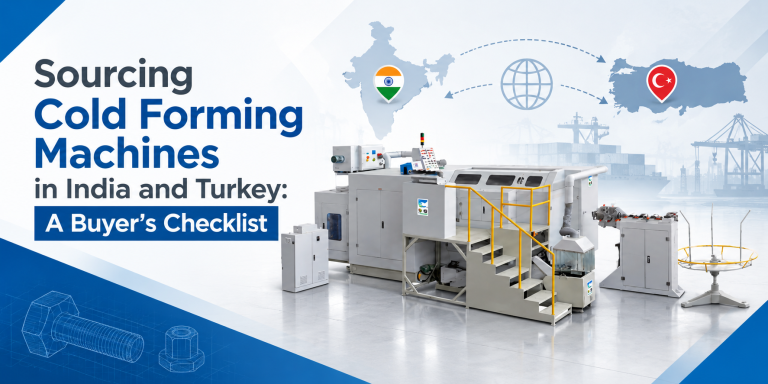

If you are planning to set up or expand a fastener production facility in India, Turkey, or Southeast Asia, one of your most critical decisions is sourcing the right cold forming equipment. These three regions are not interchangeable — each has its own regulatory environment, local quality standards, import procedures, and logistical characteristics that directly affect your total cost of ownership and time-to-production.
This guide is written for procurement managers, factory owners, and investors who are actively evaluating cold heading machines for one of these three markets. It covers:
The information in this guide is based on current trade data, customs tariff schedules, industry reports from IMARC Group and Fastener World, and practical export experience across 145+ countries. Specific duty rates and regulations change periodically — always verify with a licensed customs broker or freight forwarder before filing.
Table of Contents
All three regions share a common driver: global supply chain diversification. As manufacturers seek alternatives to over-concentrated production bases, India, Turkey, and Southeast Asia have emerged as the primary beneficiaries for fastener production capacity expansion.
India’s fastener market reached USD 11.2 billion in 2025 and is projected to grow to USD 17 billion by 2034 at a CAGR of 4.67%, according to IMARC Group. The growth is driven by three structural forces:
| India Market Indicator | 2025 Data | 2034 Projection |
|---|---|---|
| Total market size | USD 11.2 billion | USD 17.0 billion |
| CAGR (2026-2034) | 4.67% | |
| Key demand drivers | Automotive/EV (largest segment), Construction, Aerospace, Electronics | |
| Government incentives | Make in India, PLI Scheme, FAME II, Smart Cities Mission | |
Turkey’s position as a manufacturing bridge between Europe and Asia makes it uniquely valuable for automotive fastener production. Turkish manufacturers supply directly into the European automotive supply chain while benefiting from lower labor costs than Western European competitors. Key factors driving equipment investment include:
Vietnam, Thailand, and Indonesia together represent the most dynamic region in global fastener manufacturing. Industry data shows that over 12 new cold forging and surface treatment production lines were installed across Southeast Asia between January and June 2026 alone, with total investment exceeding $460 million.
Vietnam leads the growth curve. Its industrial fastener market was approximately USD 529 million in 2025 and is projected to reach $740 million by 2034. When including construction, electronics, and automotive standard parts, Vietnam’s total fastener market approaches $1.5 billion. The northern industrial zones around Hanoi (Bac Ninh, Bac Giang, Hai Phong) host Samsung, Foxconn, Luxshare, and Goertek — creating intense demand for micro-screws, precision stampings, and electronic fasteners.
Thailand remains ASEAN’s largest fastener importer (approximately 30% of regional imports) and a major exporter, with established automotive clusters around Rayong and Chonburi supplying Japanese OEMs. Indonesia showed the highest export CAGR (14.8%) among ASEAN countries from 2019-2022, driven by domestic automotive assembly and mining sector demand.
| Region | Key Strength | Primary Demand | Equipment Priority |
|---|---|---|---|
| India | $11.2B domestic market + government incentives | EV fasteners, construction bolts, aerospace-grade | High-speed multi-station (DBHP-6/8) |
| Turkey | EU Customs Union + automotive cluster | Automotive-grade (TS EN ISO 898), structural bolting | Precision high-speed (DBHP-8) + heavy-duty (DBP-206L) |
| Southeast Asia | Fastest global growth rate + RCEP tariff benefits | Micro-fasteners (electronics), auto parts, export-standard | Versatile 4-5 station (DBF-134L) + part former (DBP-136L) |
One of the most overlooked aspects of sourcing cold forming equipment is ensuring that the machine can produce parts compliant with the local standards of your target market. A cold header that produces excellent DIN-compliant bolts may need different tooling, process parameters, or even additional stations to meet IS specifications for the Indian market.

The Bureau of Indian Standards (BIS) governs fastener quality through the IS 1367 series (Technical Supply Conditions for Threaded Steel Fasteners). Key standards include:
Practical implication: If you are selling into the Indian domestic market, BIS certification (Standard Mark license) is mandatory for many fastener categories. Your cold forming machine must produce parts with consistent mechanical properties, dimensional tolerances, and surface finishes that pass BIS sampling and testing protocols. Head marking (grade identification stamped on bolt heads) and material traceability (mill test certificates per batch) are strictly enforced, especially for solar EPC, railway, and automotive applications.
Turkey’s fastener standards are harmonized with European norms through the Turkish Standards Institute (TSE). The TS prefix indicates Turkish adoption of the corresponding EN/ISO standard:
Practical implication: Because Turkey is in a Customs Union with the EU, Turkish-produced fasteners must meet the same technical requirements as those made in Germany or Italy. Your cold forming machine must deliver consistent Cpk-capable output for automotive applications and CE-compatible documentation for construction products. TSE certification and third-party test reports from accredited laboratories are standard expectations from Turkish buyers.
Unlike India and Turkey, which have unified national standard frameworks, Southeast Asian fastener manufacturers typically produce to the standard system required by their end customer:
Practical implication: A cold forming machine in Southeast Asia often needs to switch between JIS and DIN specifications depending on the order. This demands flexible tooling setups, quick-change capabilities, and a supplier who understands both standard systems. Material certificates (mill sheets), dimensional inspection data, and lot-to-lot traceability are increasingly demanded by Japanese quality teams operating in Vietnam and Thailand.
| Aspect | India | Turkey | Southeast Asia |
|---|---|---|---|
| Governing body | Bureau of Indian Standards (BIS) | Turkish Standards Institute (TSE) | Customer-specified (JIS/DIN/ANSI) |
| Primary standard series | IS 1367 (properties), IS 1363/1364 (dimensions) | TS EN ISO 898, TS EN ISO 4014, TS EN 14399 | JIS B 1186/1199, DIN EN ISO 898, ANSI/ASME |
| Certification requirement | BIS Standard Mark (mandatory for domestic sales) | TSE mark + CE marking (for construction/EU export) | Customer-specific (often ISO 9001/IATF 16949) |
| Key compliance focus | Head marking, MTC per batch, dimensional tolerance | Cpk capability, CE documentation, third-party test reports | Material traceability, visual defect inspection, mixed JIS/DIN flexibility |
Understanding the import regime for cold forming machinery is essential for calculating your true landed cost. The HS (Harmonized System) code determines the applicable duty rate, and each country applies its own calculation methodology.
Cold heading machines (also called headers, upsetters, or cold forging presses) fall under HS Chapter 84 — Machinery and Mechanical Appliances. The specific codes are:
Most cold heading/forge-header machines will classify under 84621100. Always confirm the exact classification with your customs broker, as incorrect coding can result in penalties, delays, or overpayment.
India calculates import duties using a stacked approach on the CIF (Cost, Insurance, Freight) value. For HS 84621100/84629000:
| Duty Component | Rate | Applied On |
|---|---|---|
| Basic Customs Duty (BCD) | 7.5% | Assessable value (CIF) |
| Agriculture Infrastructure & Development Cess (AIDC) | 7.5% of BCD | BCD amount |
| Social Welfare Surcharge (SWS) | 10% of (BCD + AIDC) | BCD + AIDC amount |
| Integrated Goods & Services Tax (IGST) | 18% | CIF + BCD + AIDC + SWS |
| Total Effective Duty | Approximately 28.47% on CIF value | |
FTA relief: India has preferential duty agreements with multiple countries. Under the ASEAN-India FTA, goods originating from ASEAN countries may qualify for 0% BCD. Similar zero or reduced rates apply for imports from Japan, Australia, Malaysia, Singapore, Sri Lanka, UAE, and others — subject to Rules of Origin verification. If your supplier can provide valid Certificate of Origin documentation, the effective duty can be significantly reduced.
Required documents for India customs clearance: Commercial invoice, packing list, bill of lading, certificate of origin, insurance policy, import license (if applicable under DGFT ITC-HS classification), and GST registration of the importer.
Turkey’s import regime is shaped by its Customs Union with the European Union. The key principle: goods originating in the EU enter Turkey at zero customs duty. Goods from non-EU countries (including China) face the standard Turkish tariff schedule.
For machinery under HS 8462:
Important note: Turkey uses a 12-digit GTIP (Gümrük Tarife İstatistik Pozisyonu) code system that extends the WCO HS code. The correct 12-digit code determines the precise duty rate. Misclassification is a common cause of customs delays and penalties.
Required documents for Turkey customs clearance: Commercial invoice, bill of lading/airway bill, packing list, certificate of origin (EUR.1 for preference claims), ATR certificate (for EU-Turkey Customs Union movement), TAREKS pre-approval (for regulated machinery), and CE conformity declaration if applicable.
ASEAN countries maintain individual import tariff schedules, but the Regional Comprehensive Economic Partnership (RCEP) — effective since 2022 — provides preferential rates for intra-Asian trade. Import duty rates for HS 8462 machinery vary significantly by country:
| Country | MFN Duty (HS 8462) | RCEP/FTA Preference | VAT/GST |
|---|---|---|---|
| Vietnam | 3% | RCEP may reduce further for China-origin | 10% (VAT) |
| Thailand | 30% | ASEAN-China FTA → reduced rate available | 7% (VAT) |
| Indonesia | 5% | RCEP / ASEAN-China FTA preference | 11% (VAT) |
| Malaysia | 0% | Already duty-free under MFN | 10% (SST) |
| Philippines | 0% | Already duty-free under MFN | 12% (VAT) |
Critical tip: Always work with a local customs broker who understands the specific FTA rules of origin for your transaction. The difference between MFN duty and FTA-preferential duty can represent thousands of dollars on a single machine shipment.
Cold forming machines are heavy, sensitive equipment. A typical 6-station cold header weighs between 15 and 40 metric tons depending on capacity. Shipping requires careful planning for container selection, inland transport, crane capacity at both origin and destination, and installation timeline coordination.
| Route | Sea Freight | Air Freight | Key Ports/Airports |
|---|---|---|---|
| China → India | 18-25 days (Nhava Sheva / Mundra / Chennai) | 4-7 days (Delhi / Mumbai / Chennai) | JNPT, Mundra, Chennai, Delhi T3 |
| China → Turkey | 28-38 days (Istanbul Ambarli / Izmir / Mersin) | 5-9 days (Istanbul IST / SAW) | Ambarli, Alsancak, Mersin, IST, SAW |
| China → Vietnam | 10-14 days (Ho Chi Minh City / Hai Phong) | 3-5 days (Hanoi / HCMC) | Cat Lai, Hai Phong, Noi Bai, Tan Son Nhat |
| China → Thailand | 12-16 days (Laem Chabang / Bangkok) | 3-6 days (Suvarnabhumi / Don Mueang) | Laem Chabang, Bangkok Port, SVX, DMK |
| China → Indonesia | 14-18 days (Jakarta / Surabaya) | 4-7 days (CGK / SUB) | Tanjung Priok, Tanjung Perak, CGK, SUB |
Not all cold forming machine suppliers have equal experience serving these three markets. When evaluating a potential supplier, use this checklist to assess their actual capability for your specific region:
⚠ Red Flags to Watch For:
reluctance to conduct video factory tours or trial production runs
The purchase price of a cold forming machine is only the beginning. Over a 15-20 year service life, spare parts and technical support typically represent 15-25% of the machine’s initial cost — and can be much higher if parts are difficult to source locally.
As a manufacturer with active customers in 145+ countries, Dongrui maintains a structured after-sales support framework:
International machinery purchases involve significant capital exposure. Structuring payment terms correctly protects both buyer and seller while keeping the transaction commercially viable.
| Structure | Terms | Best For | Risk Profile |
|---|---|---|---|
| Deposit + Balance | 30% deposit / 70% before shipment | First-time buyers, standard orders | Moderate — buyer secures production slot; seller protected against cancellation |
| Irrevocable LC at Sight | 100% LC payable upon presentation of shipping documents | Established buyers, banks comfortable with supplier credit | Low — bank-guaranteed payment; balanced risk |
| Escrow / Trade Assurance | Funds held by third party until acceptance confirmed | Smaller orders, new buyer-supplier relationships | Low for buyer — funds released only upon satisfactory acceptance |
| Milestone-Based | 30% deposit / 30% at factory inspection / 30% at shipment / 10% after installation | Large orders, custom machines, high-value transactions | Lowest — payment tied to verified progress milestones |
Use this checklist to track progress from initial inquiry to running production. Print it out and check off each step as completed.
Phase 1: Research & Supplier Selection (Weeks 1-3)
☐ Define machine specifications (wire diameter range, max part length, stations, speed requirement)
☐ Identify 2-3 qualified suppliers with export experience in your target region
☐ Request quotations with detailed specifications, delivery terms, and warranty
☐ Conduct virtual factory inspections and verify customer references
☐ Negotiate payment terms and finalize purchase contract
Phase 2: Pre-Shipment Preparation (Weeks 4-8)
☐ Confirm HS code classification with your customs broker
☐ Calculate total landed cost (machine price + freight + insurance + duties + taxes + inland transport)
☐ Arrange factory acceptance test (in-person or live video)
☐ Confirm spare parts package contents and initial tooling setup
☐ Engage freight forwarder and book shipping space
Phase 3: Shipping & Customs Clearance (Weeks 9-14, varies by route)
☐ Machine packed and loaded at supplier factory
☐ Supplier provides full documentation (invoice, packing list, B/L, CO, insurance certificate)
☐ Shipment departs port of loading
☐ Pre-clearance preparation with customs broker (document review, duty estimation)
☐ Goods arrive at destination port; customs clearance initiated
Phase 4: Installation & Commissioning (Weeks 15-18)
☐ Inland transport to your facility (confirm crane/forklift capacity)
☐ Machine unloaded, positioned, and leveled on foundation
☐ Electrical connection and utility hook-up (power, compressed air, lubrication system)
☐ Supplier technician arrives for installation and commissioning
☐ Test run with your actual tooling and raw material
☐ Operator training completed (machine operation, basic maintenance, safety procedures)
☐ Final acceptance signed; balance payment released (if applicable)
☐ Machine enters regular production — welcome to your new capacity!
Cold heading machines (headers, upsetters, cold forging presses) generally fall under HS 84621100 (closed die forging machines) or HS 84629000 (other metal-working forging machines). In India, the total duty stack for these codes is approximately 28.47% on CIF value (7.5% BCD + cess/surcharges + 18% IGST). Turkey’s rate depends on origin — EU-origin goods under the Customs Union may qualify for zero duty, while non-EU origin faces 5-25% BCD plus 20% VAT. Southeast Asian rates vary widely: Vietnam (~3% + 10% VAT), Thailand (~30% MFN, reducible under ASEAN-China FTA), Indonesia (~5% + 11% VAT), Malaysia (0% + 10% SST), Philippines (0% + 12% VAT). Always confirm the exact 12-digit code with a licensed customs broker before filing.
Sea freight is the standard method for machinery shipments due to cost and weight. Typical transit times from Chinese ports: India: 18-25 days (to Nhava Sheva/Mundra/Chennai); Turkey: 28-38 days (to Istanbul Ambarli/Izmir/Mersin); Vietnam: 10-14 days (to Ho Chi Minh City/Hai Phong); Thailand: 12-16 days (to Laem Chabang/Bangkok); Indonesia: 14-18 days (to Jakarta/Surabaya). Air freight is available for urgent spare parts (3-9 days) but is rarely cost-effective for complete machines. Add 3-7 working days at each end for inland transport, customs clearance, and port handling.
Yes, the structures differ substantially. India uses a duty-stack approach: Basic Customs Duty (7.5%) + Agriculture Infrastructure Development Cess (0.56% of CIF) + Social Welfare Surcharge (0.81% of CIF) + IGST (18% on cumulative value) = approximately 28.47% total. However, FTA preferences (ASEAN-India, Japan-India, etc.) can reduce BCD to 0% for qualifying origins. Turkey uses a simpler but origin-sensitive structure: EU-origin machinery enters at 0% duty under the Customs Union (only 20% VAT applies), while non-EU origin faces 5-25% BCD plus 20% VAT on the CIF+duty sum. For a China-origin machine, Turkey’s total landed cost is typically lower than India’s, but the exact comparison depends on the specific GTIP code, exchange rates, and whether FTA preferences are utilized in either market.
Each region has its own standard framework. India requires compliance with the IS 1367 series (mechanical properties, coating systems, dimensional tolerances) administered by the Bureau of Indian Standards (BIS). BIS Standard Mark certification is mandatory for many fastener categories sold domestically — meaning your machine must consistently produce parts that pass BIS sampling protocols, with head marking, material test certificates, and batch traceability. Turkey follows the TS EN ISO series (TS EN ISO 898 for properties, TS EN ISO 4014 for bolt dimensions, TS EN 14399 for structural bolting) under the Turkish Standards Institute (TSE), aligned with EU norms. CE marking is required for construction-grade fasteners. Southeast Asia uses a customer-dependent mix: JIS standards dominate in Japanese-led factories (Toyota/Honda/Sony supply chains), DIN for European-exporting producers, and ANSI for US-bound products. Many SEA factories must switch between JIS and DIN depending on the order — requiring flexible tooling and a supplier who understands both systems.
Payment practices vary by buyer profile and relationship history, but common structures include: (1) 30% deposit / 70% before shipment — the most common arrangement for first-time buyers, balancing buyer commitment with seller protection; (2) Irrevocable Letter of Credit at sight — preferred by established buyers whose banks are comfortable with the supplier’s credit standing; (3) Escrow or Trade Assurance (Alibaba Trade Assurance, etc.) — popular for smaller orders or new relationships, with funds released only upon buyer acceptance; (4) Milestone-based payments (30/30/30/10 split across deposit, factory inspection, shipment, and post-installation) — best for large custom orders. Dongrui accepts all four structures and can tailor terms based on buyer qualifications and order value. Regardless of the structure, always define the acceptance criteria and Incoterms explicitly in the purchase contract.
Sourcing a cold forming machine for India, Turkey, or Southeast Asia is not just about selecting the right model — it is about understanding the entire ecosystem of standards, regulations, logistics, and ongoing support that will determine your success in that specific market.
Here is the decision framework summarized:
Dongrui Equipment has been exporting cold forming machines to India, Turkey, and Southeast Asia for over 35 years. With 145+ countries of export experience, National High-Tech Enterprise certification, and a dedicated after-sales team supporting customers across all three regions, we understand what it takes to get your production line running — and keep it running.
Ready to discuss your project? Our engineering team can recommend the right machine configuration for your specific market, part specifications, and production targets.
Dongrui Equipment — Cold Forging Machine Manufacturer Since 1989 · About Us · Products · Contact
1. Introduction If you’re in the market for a multi-station
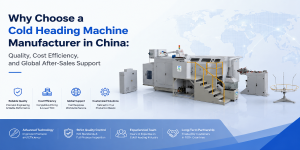
1. Introduction For decades, “Made in China” in the machinery
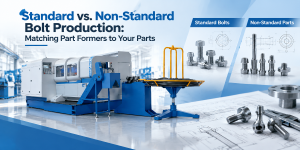
Table of Contents Introduction What Defines Standard vs Non-Standard Bolts

1. Market Growth and Scale In 2026, the global cold
 Optimized by Seraphinite Accelerator