1. Introduction In the highly competitive arena of high-volume industrial
 Skip to content
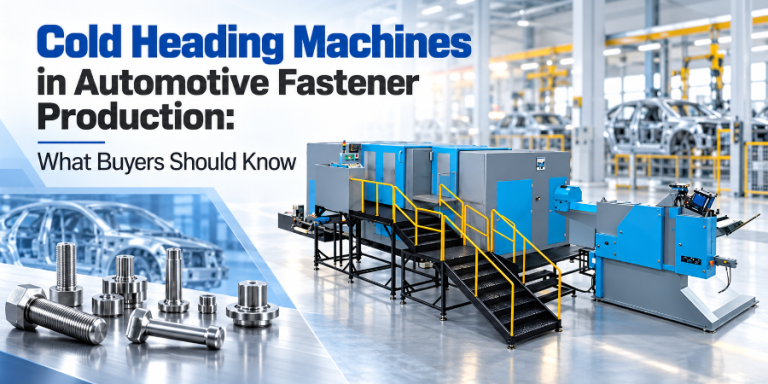

Cold forming sits is the process built for high-rate, high-consistency production of structural fasteners. When the part count climbs into the millions and the strength requirements tighten, the economics of upsetting and extruding wire at room temperature become hard to ignore. This article looks at why new energy vehicle fasteners have become such a fast-moving category, where the parts actually go, and why cold forming is the natural fit for the materials and tolerances involved.
Recent industry analysis makes the trend concrete. A 2026 market report places the Asia Pacific region at more than 40 percent of global fastener consumption, a share driven largely by electric vehicle assembly and the battery supply chain built around it. That concentration is not accidental. APAC hosts the largest clusters of cell manufacturing, pack assembly, and vehicle production, and each of those stages consumes fasteners at scale.
What sets EV fastener manufacturing apart from legacy automotive is the breadth of new joining points. A combustion car carries a known set of bolts through its chassis and engine. An electric platform adds battery enclosures, busbar mounts, inverter housings, and charging hardware, each with its own fastening spec. The result is a category that grows faster than vehicle units alone would suggest, because every added system multiplies the count of precision fasteners required.
The demand spreads across three distinct zones. Battery-pack structural fasteners hold the enclosure, the modules, and the cooling structure together, and they must stay secure through thermal cycling and vibration that a conventional bolt rarely sees. Power electronics hardware, including inverters and onboard chargers, depends on smaller fasteners that still need tight dimensional control to seat correctly against machined surfaces.
The third zone reaches beyond the vehicle itself. Cold forging wind turbine bolts supports the towers and nacelles of the wind farms that supply clean electricity to the grid and to charging networks. These are large, high-strength parts where a failure is expensive and a recall is unacceptable. Together, the three zones show why new energy vehicle fasteners are less a single product line than a family of demanding applications.
The move to electric platforms changes the metals involved. Battery structures and enclosures increasingly use high-strength steel and lightweight alloys to meet crash and weight targets, and those materials form differently than the mild steel that traditional fastener shops know well. Higher alloy content raises the forming load, while aluminum and its variants demand careful control of lubrication and transfer to avoid cracking.
Cold forming battery pack bolts from these materials is therefore an engineering task, not just a production one. The die design, the cutoff accuracy, and the stroke profile all have to account for how the specific alloy flows. Shops that treat every wire grade the same will see rejects climb. Those that tune the process to the material keep yield high even as the spec sheet moves toward stronger and lighter metals.
For high-strength fastener EV production, cold forming holds several advantages that machining cannot match. The process is near net shape, which means almost no material is removed and waste stays minimal even on expensive alloys. More importantly, cold working preserves and improves the grain flow of the metal along the head and underhead fillet, the exact regions where a structural fastener carries load. That grain flow translates into better fatigue strength than a cut thread or a machined shank would offer.
Machining, by contrast, interrupts that grain flow with every pass of the tool. For a fastener that must survive years of road vibration or tower sway, the formed part is simply the stronger starting point. When you add the material savings on costly alloys, the case for forming over cutting becomes clear on both the performance and the cost side.
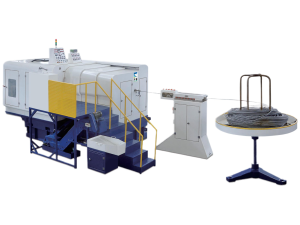
Many NEV fasteners are not simple hex bolts. They carry flanges, collars, reduced shanks, or asymmetric heads that would need several machining steps if made the conventional way. Multi-station cold formers handle this complexity in a single continuous flow, building the geometry across four to six stations before the part is ejected.
The benefit is twofold. First, secondary machining drops sharply, which protects both the schedule and the margin. Second, the tight tolerances needed for power electronics and pack hardware become repeatable, because the part is shaped rather than cut to fit. A high-speed former rated for several hundred parts per minute on small standard parts can therefore serve the precision end of the EV range without sacrificing throughput.
The EV segment does not separate strength from weight. Light weighting targets push designers toward thinner sections and higher grades at the same time, which raises the bar on every fastener that holds the structure together. Meeting that bar depends on process control as much as on material choice.
These requirements connect directly to the precision and traceability discipline that automotive-grade cold forming demands, the same theme we examined when looking at connected, data-driven production. A shop that can document how each lot was formed, and that can hold the tolerance batch after batch, is the shop that earns the long-term supply agreements in this market. Quality here is not a checkpoint at the end of the line. It is built into the forming process from the first stroke.
The new energy vehicle wave is the clearest growth signal in fasteners this decade, and it rewards suppliers who can form strong, light, consistent parts at volume. Cold forming delivers the near-net-shape efficiency, the grain-flow strength, and the multi-station capability that EV and battery-system fasteners require, while wind-turbine bolts extend the same logic into renewable generation.
In many cases they use the same fastening principles, yet the volume, the materials, and the vibration and thermal demands of battery systems push the specs higher than legacy parts.
Yes, provided the die and process are tuned to the specific grade. High-strength steel and certain light alloys form well when lubrication, cutoff, and stroke profiles are set for the material.
Both belong to the clean-energy chain. Turbines generate the power that charges EVs, and their towers need large cold-forged high-strength bolts, so the same forming expertise serves both.
They usually do, because shaping the geometry in line removes most of the machining that would otherwise cut away material and create chips.
Through consistent process data, documented tolerances, and the ability to trace each lot, which is why connected, monitored forming cells matter in this segment.
Zhejiang DongRui is a practical reference. Built for customers who prioritize high efficiency and efficient use of both manpower and floor space.Explore the full product range and request a quote to see how a high-rate former would fit your NEV and clean-energy fastener program.
1. Introduction In the highly competitive arena of high-volume industrial
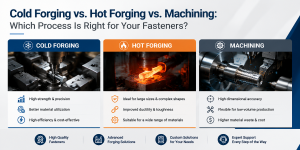
1. Introduction Every fastener manufacturer faces the same fundamental question:
1. Market Growth and Scale In 2026, the global cold
Table of Contents Introduction Daily Inspection Checklist Weekly and Monthly
 Optimized by Seraphinite Accelerator