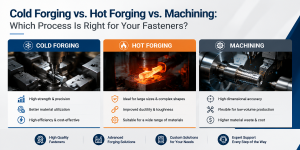
1. Introduction Every fastener manufacturer faces the same fundamental question:
 Skip to content

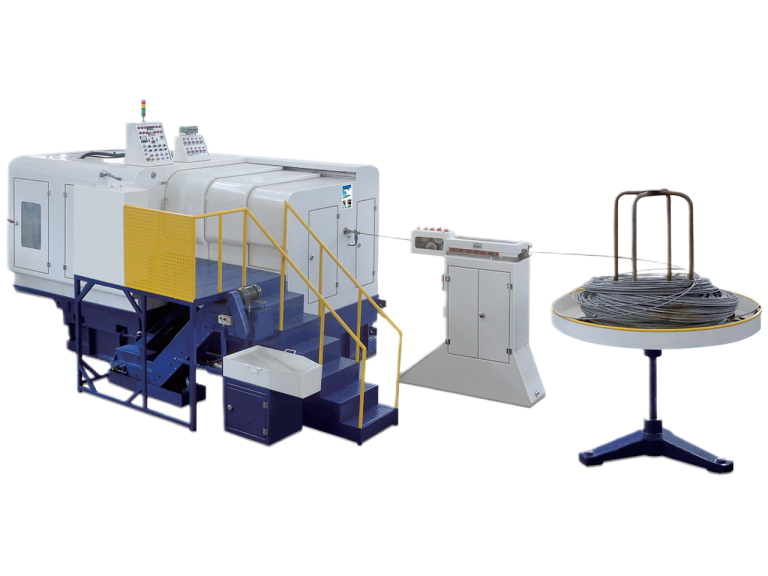
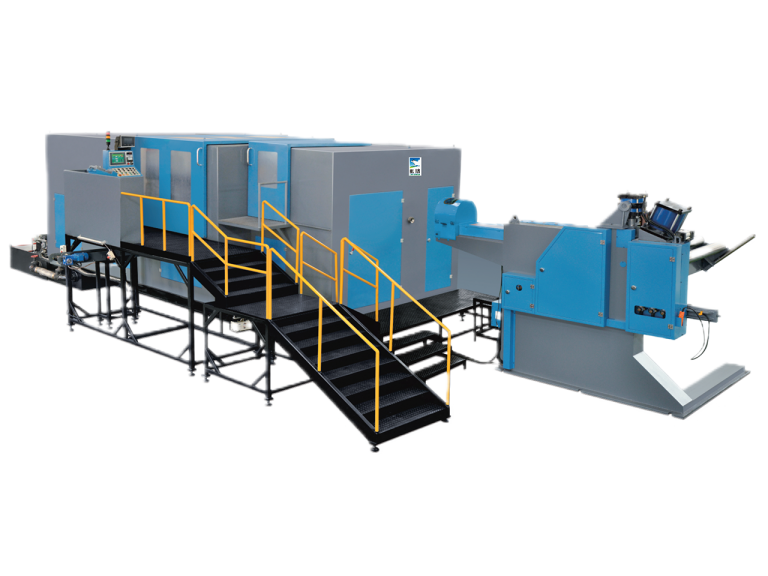

Fastener manufacturing has always been a high-volume, low-margin game. A single automotive-grade bolt may sell for cents, so profit is decided by uptime, labor efficiency, and scrap rate. In the last five years, labor shortages in developed markets and wage inflation in traditionally low-cost regions have pushed plant managers to look at automation differently: not as a way to replace people, but as a way to remove the unplanned variability that people introduce.
That variability is largest at the forming press. A multi-station cold former runs at 60–350 strokes per minute. At that cadence, a delayed wire load, a misaligned blank, or a hesitant transfer adds seconds that the machine cannot recover. Robotic handlers and auto-feeders do not simply move faster than people; they move at a predictable, repeatable cadence that matches the press cycle. The result is fewer micro-stoppages, more stable head quality, and the option to run unattended shifts where the economics support it.
This guide explains how auto-feeders and robotic handlers tie into progressive cold forming lines, what kind of monitoring closes the loop on OEE, and how to judge whether your current plant is ready for the investment.
Three pressures are driving the shift from manual tending to automated cells:
The economics are straightforward. If a cell produces 250 pieces per minute and labor limitations cause 45 minutes of lost cycle time per shift, that is 11,250 pieces of lost capacity. At a blended margin of a few cents per piece, the annual cost of that lost time often exceeds the capital cost of the auto-feed and robotic handler package.
A modern automated fastener cell is not a cold former with a robot bolted to the side. It is a timed production loop in which every element is sequenced to the crank angle of the press:
| Function | Manual cell pain point | Automation gain |
|---|---|---|
| Wire loading | Operator fatigue and inconsistent coil change timing | Auto-decoiler with slack-loop control; splice detection |
| Blank feed | Misfeeds at high speed; hand proximity to dies | Servo-driven feeder with ±0.1 mm length repeatability |
| Transfer between stations | Manual or mechanical finger timing drift | Programmable transfer fingers indexed to crank angle |
| Part removal | Operator reach into the die area | Robotic arm with safe-zone interlocks |
| Secondary handling | Dropped parts and mixed lots | Vision-guided pick-and-place to labeled bins |
If you are new to multi-station forming, our guide to 4/5/6-station cold formers explains how station count relates to part complexity.
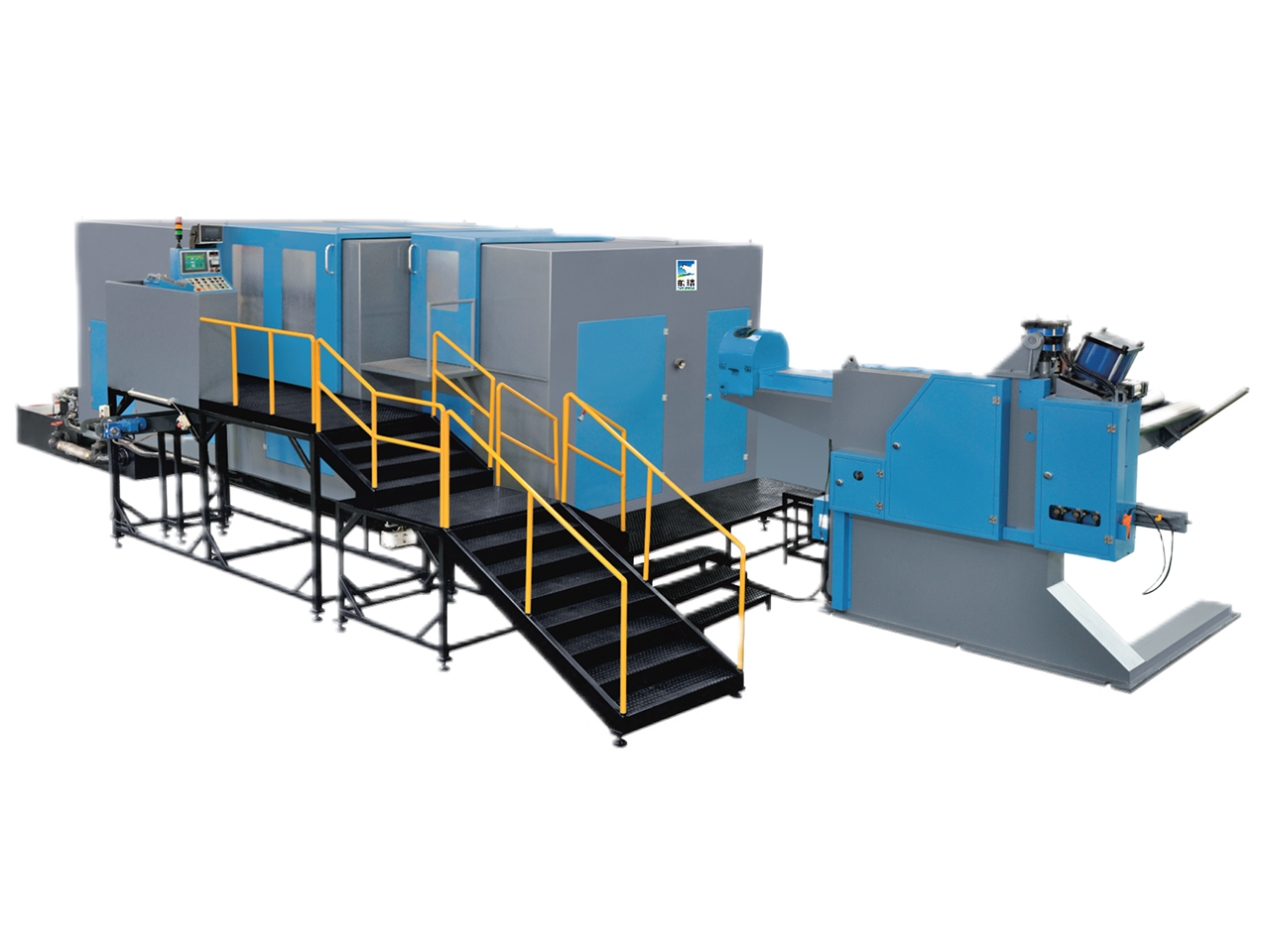
OEE (Overall Equipment Effectiveness) is Availability × Performance × Quality. The biggest quick wins usually come from Performance — the machine is running, but not at nameplate speed because of micro-stoppages. A micro-stoppage is any interruption under five minutes: a wire tangle, a bin full signal, a hesitant load, a die-monitoring false trip. Individually they look trivial; together they can eat 15–25 % of available production time.
| Parameter | Sensor / source | Why it matters |
|---|---|---|
| Main motor current / load | VFD or servo drive | Rising load = tool wear, material hardness drift, or die misalignment |
| Crank angle and stroke rate | Resolver/encoder on main shaft | Detects slowdowns before operators notice them |
| Feeder position error | Servo feedback | Catches wire straightener or decoiler issues early |
| Part presence / reject counts | Optical or proximity sensors | Maps quality trends to tool life and material batches |
| Robot fault codes | Robot controller | Flags gripper wear, air pressure drops, and path drift |
Monitoring only helps if it generates action. Best-practice plants use a tiered response: a yellow alarm sends a text to the operator, a red alarm stops the cell and logs a reason code. After two weeks of reason codes, the top three stoppage causes become the maintenance team’s priority list. The typical result is a 12–20 point OEE gain in the first two quarters and a 30–40 % reduction in unplanned downtime after a year.
We covered the sensor side of this in more detail in Smart Cold Forming: How IoT Sensors and Predictive Maintenance Are Reshaping Fastener Production.
Automation does not remove the need for safety engineering. A robotic handler removes the operator from the die area, but the press itself still closes with hundreds of tons of force. A sound safety hierarchy combines physical guards, electronic interlocks, and administrative controls.
| Layer | Typical measure | Purpose |
|---|---|---|
| Physical | Fixed fencing, interlocked gates, telescopic guards | Prevent access to die and transfer area |
| Electronic | Light curtains, laser scanners, two-hand controls | Stop motion before a person reaches the hazard |
| Robot-specific | Speed/separation monitoring, collaborative force limits | Reduce impact energy if someone enters the robot envelope |
| Procedural | Lock-out/tag-out, setup keys, access badges | Control who can bypass guards and when |
| Training | Cell behavior, alarm response, restart procedure | Make sure automation changes do not create new habits that bypass safeguards |
A well-designed cell also separates operator access routes from robot work envelopes. The robot picks from the press discharge point and places to a conveyor outside the fence; the operator replenishes wire and removes trays through a separate gate that does not open into the robot path.
DongRui builds progressive cold formers with automation in mind from the frame up. The controllers expose Modbus / OPC-UA data, the electrical cabinet has I/O spare capacity for feeder and robot signals, and the bed mounting surfaces accept auto-feed and robotic-handler brackets without custom fabrication.

Retrofitting an older former is feasible if the machine bed, ram guideways, and clutch/brake are in good condition. DongRui can supply controller upgrades, sensor packages, and auto-feed interface kits for existing machines. The break point usually comes at around 10–12 years of age: beyond that, the cumulative mechanical wear makes a new machine more reliable than a heavily retrofitted one. For the full production-line picture, see our complete fastener production line setup guide.
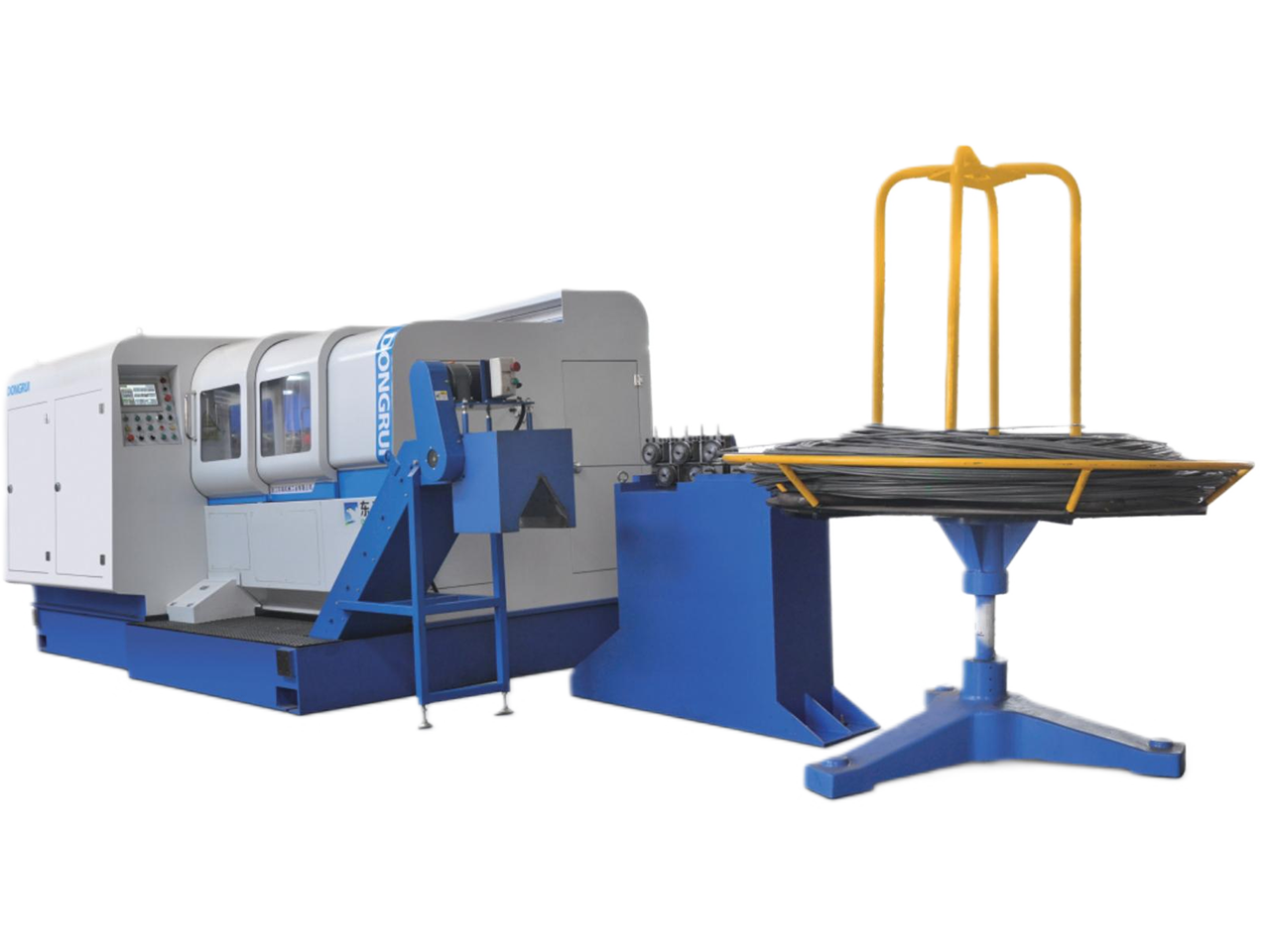
Automation rewards stable processes and punishes chaotic ones. Before adding robots, run a short self-assessment:
| Readiness area | Question to answer | Pass threshold |
|---|---|---|
| Process stability | Can the current manual cell hold spec for a full shift without operator adjustment? | Cpk ≥ 1.33 on critical dimensions |
| Material consistency | Does incoming wire vary in diameter, hardness, or surface coating? | Lot variation within ±2 % of nominal |
| Maintenance discipline | Are PM schedules followed and tool-life tracked? | >90 % PM on-time completion |
| Data infrastructure | Is there a network drop, MES, or local dashboard to receive machine data? | At least local Ethernet and a dashboard |
| Volume justification | Will the cell run enough hours per year to amortize the automation package? | >4,000 production hours/year or multi-shift plan |
If three or more areas score below the pass threshold, fix those first. Automation layered on an unstable process only makes the instability visible faster.
Auto-feeders and robotic handlers do not simply remove labor from a fastener cell; they make the cell behave like a continuous process instead of a series of operator-dependent events. The result is better OEE, tighter dimensional control, safer working conditions, and the data trail that automotive and aerospace customers now expect.
DongRui progressive multi-station formers are designed to drop into this architecture. With standard I/O, automation mounting provisions, and IoT-ready controllers, they let you start with a single automated cell and scale across the shop floor without replacing machines that are still mechanically sound.
Related reading: Cold Heading Titanium & High-Temperature Alloys | Why High-Speed Cold Formers Lower Cost per Fastener | Cold Heading Machine Maintenance Checklist
Yes, if the mechanical condition is sound. DongRui supplies controller upgrades, auto-feed interfaces, and sensor packages for existing DBP and DBHP machines. The practical limit is usually 10–12 years of service life; beyond that, the cost of mechanical refurbishment often makes a new machine the better investment.
Light-duty pick-and-place arms typically need grease service every 5,000–10,000 hours and gripper inspection every 500–1,000 hours. Heavy-payload arms in three-shift operations should be inspected daily for cable wear, fastener torque, and end-effector alignment. Predictive monitoring of motor current and vibration can extend service intervals by 30–40 %.
For a high-volume automotive or construction-fastener cell running two or three shifts, payback commonly falls between 18 and 30 months. The main drivers are labor savings, recovered micro-stoppage time, and reduced scrap from more consistent handling. Aerospace and specialty fastener cells may take 24–36 months because volumes are lower, but the value of traceability and quality consistency often justifies the longer payback.
1. Introduction Every fastener manufacturer faces the same fundamental question:
Scrap is the quiet margin killer in fastener plants. See
Table of Contents Introduction What smart cold forming actually means
1. Introduction When evaluating cold forming machines, the first number
 Optimized by Seraphinite Accelerator