
Table of Contents Introduction What thread rolling is What thread
 Skip to content


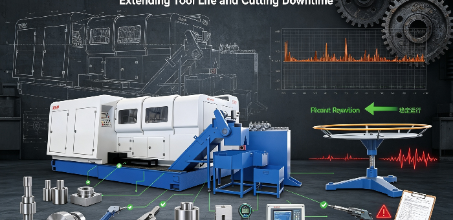

Aerospace fasteners are the one place in fastener manufacturing where a ±0.05 mm deviation is a certification event, not a scrap bin item. Titanium Grade 5 (Ti-6Al-4V), Inconel 718, A286 and precipitation-hardening stainless grades dominate that market, and all of them are far less forgiving in a cold header than the carbon or low-alloy steel running through a typical bolt shop.
Cold heading itself has not changed: a cut wire blank is pushed by a punch into a closed die and flowed plastically into shape, usually across several stations in one machine revolution. What has changed is the material and the expectations. Airframe OEMs now qualify suppliers on dimensional consistency and mechanical property spread, which forces the forming shop to prove that its machine, tooling and lubrication package can hold a hard alloy together — without cracking, without galling, and without drifting out of tolerance after eight hours of production.
This guide walks through what actually limits cold heading of titanium and high-temperature alloys, what machine characteristics remove those limits, and how to read your own alloy specification against a forming machine’s real capability.
Three market forces pushed aerospace fasteners onto precision cold forming in the last decade:
The practical consequence: the forming operation must move from “make the part” to “make the part identically for 40,000 pieces.” That is a machine-capability question, not just a tooling question.
Four material properties explain nearly every hard-alloy cold heading failure you will see on a shop floor.
Titanium conducts heat at roughly 6–7 W/m·K against about 45 W/m·K for carbon steel, and nickel-base alloys are only slightly better. The deformation heat from the blow therefore cannot conduct away into the workpiece core; it concentrates in a thin surface layer that touches the die. That layer softens locally, galling starts, and the tool surface picks up material.
Carbon steel with a strain-hardening exponent n around 0.20–0.25 hardens quickly at the surface as it flows, which acts like a built-in lubricant layer. Titanium sits near n ≈ 0.02–0.04. The material keeps flowing at nearly constant flow stress, so the contact pressure on the die stays high for the whole stroke.
For Ti-6Al-4V the yield strength is typically 85–90 % of the ultimate tensile strength. Once local yielding starts, failure follows almost immediately. Every reduction step must stay inside a narrow window: enough deformation to fill the die, not enough to crack the fillet.
Titanium’s elastic modulus is about 110 GPa — roughly half that of steel. A part that has been formed will spring back more when the load is released, so the die cavity must be dimensioned for the springback, not for the final geometry. Titanium also chemically bonds to tool steel under pressure and heat, which is exactly what the galling failure mode is.
| Property | Carbon steel | Ti-6Al-4V | Inconel 718 |
|---|---|---|---|
| Thermal conductivity | ~45 W/m·K | ~6.7 W/m·K | ~11 W/m·K |
| Strain-hardening exponent n | 0.20–0.25 | 0.02–0.04 | ~0.10 |
| Yield / tensile ratio | ~0.60 | 0.85–0.90 | 0.75–0.85 |
| Elastic modulus | 210 GPa | 110 GPa | 200 GPa |
| Typical forming pressure | baseline (1.0×) | 2.0–2.5× | 1.8–2.2× |
| Headroom on reduction per blow | wide | narrow | narrow |
Tonnage is the number buyers shop on, but for hard alloys tonnage without rigidity is scrap production. The forming load in a titanium blow is not a short spike you can ride through; it is a high-magnitude load applied with precision at the moment of metal flow. If the machine frame deflects, the punch and die stop being concentric.
| Design element | Why it matters for titanium |
|---|---|
| One-piece cast bed (not bolted plates) | Keeps the ram and die table concentric under 2–2.5× forming load; no cumulative bolt gaps. |
| Long, full-length ram guideways | Resists the tilting moment created by off-centre loading on a low-modulus part. |
| Over-sized main shaft and heavy connecting-rod assembly | Delivers the tonnage without stretching the load path that the bed must then absorb. |
| Knock-out and PKO strokes matched to material flow | A CNC-machined KO stroke prevents the part from being held in the die by titanium’s springback. |
| Adjustable main-ram tonnage with overload trip | Protects tooling and the bed when material batch hardness drifts upward. |
If you want the underlying structural principle, we covered it in detail in how machine bed rigidity and structural design extend carbide tooling life.
Slowing the machine down is the usual first response to titanium galling, and it is the wrong one. Galling is a boundary-lubrication failure driven by pressure and temperature at the tool interface; speed is only indirectly related. The two levers that work are surface engineering on the tool and an genuine extreme-pressure (EP) lubricant.
An EP additive stays effective when the oil film is squeezed out. For titanium that means solid-filler or bonded coatings rather than plain oil: molybdenum disulphide, graphite, PTFE-based dry films, or a phosphate conversion coating on the blank followed by a draw lubricant. The phosphate layer is particularly valuable — it is a sacrificial micro-roughness that mechanically locks the lubricant film to the blank surface, so it survives the first impact instead of being wiped away.

Die material, coating choice and reconditioning intervals are covered separately in our cold heading die design and maintenance guide.
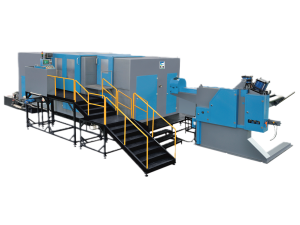
DongRui builds multi-station cold formers in which the hard-alloy advantages come from the machine architecture, not from option packages. Multi-station forming is the right route for titanium precisely because it breaks one large reduction into several small ones — station one upsets the head, station two forms the fillet, station three or four finishes the contour. Each step stays safely inside the narrow reduction window that a high yield-to-tensile ratio allows.
Three machines from the range illustrate how the capability maps to aerospace work:
| Machine | Cut-off diameter | Output | Typical hard-alloy role |
|---|---|---|---|
| DBP-136LL multi-station cold heading machine | 18 mm | 45–70 pcs/min | Standard and non-standard aerospace bolts and parts, 55 kW main drive with 380 mm main ram stroke. |
| DBP-255SL high-precision intelligent cold heading machine | 30 mm | 35–55 pcs/min | Larger-grade airframe fasteners; 90 kW drive and 330 mm main ram stroke for the higher forming load titanium demands. |
| DBP-148L heavy-duty 8-station part former | 23 mm | 50–90 pcs/min | Non-standard parts with high-precision requirements, where eight stations split the reduction across more steps and hold tolerance longer. |

Choosing the correct station count is a decision about reduction per blow, which we break down in how to choose between 3-station, 5-station and 7-station cold forgers.
When you receive a drawing or a print spec, five checks tell you whether a standard cold header can do the job.
For the cost side of the comparison, see cold heading versus CNC turning.
Cold heading titanium and high-temperature alloys is not a matter of forcing a standard machine to run a harder material. It is a matched system: the alloy’s low conductivity, low strain-hardening exponent and high yield-to-tensile ratio set the reduction limits; the machine’s tonnage and cast-bed rigidity hold geometry while that load is applied; and the tooling coating plus an EP lubricant keep the tool interface from galling. Get all three right and a multi-station former produces aerospace fasteners with grain flow, repeatable dimensions and a material cost that survives qualification.
The practical next step for most shops is a trial run on the actual alloy: one tool set, one lubrication package, 500 pieces, measured. That single test tells you more about tonnage, reduction limits and tool wear than any datasheet comparison — and it is the fastest route to a qualified aerospace part.
In carbon steel, a carbide tool set on a multi-station former can run for hundreds of thousands of pieces before reconditioning. On Ti-6Al-4V the same geometry typically wears 3–5× faster, and on Inconel 718 the interval shortens again because the alloy work hardens at the interface and carries more alloying burden. The wear is rarely uniform: it concentrates on the forming surfaces that see the highest contact pressure, usually at the die entrance radius. The practical countermeasure is not harder tools alone but phosphorus-coated blanks, an EP bonded lubricant, and a planned reconditioning cycle based on pieces produced rather than on visual inspection. For high-volume aerospace runs, having two tool sets and measuring one while the other is being reconditioned keeps the cell running.
Heat treatment must be sequenced after cold heading, and the sequence is material-specific. Cold heading work hardens the formed region and leaves it in residual compression; a subsequent anneal removes that, so you must hit the required mechanical properties after the heat treatment — not before. For Ti-6Al-4V that generally means a vacuum anneal (or solution treat plus ageing) to reach the specified strength and to control interstitial pickup; hydrogen exposure above roughly 150 ppm causes hydrogen embrittlement, which is why vacuum processing with controlled cooling matters. Inconel 718 is solution treated and then aged, typically around 980 °C followed by a lower-temperature age, which also relieves the forming stresses. Practical rule: do not anneal between forming stations unless the forming process actually demands it, because every extra-cycle heat treatment is another opportunity for distortion on a low-modulus part. Our heat treatment guide for cold-headed fasteners compares the strength targets in more detail.
Before heat treatment, a cold-headed titanium fastener sits in the as-formed condition and is not at its final strength — the forming operation mainly defines geometry and grain flow. After solution treating and ageing, Ti-6Al-4V fasteners commonly reach 1,100–1,300 MPa ultimate tensile strength depending on section size and quench rate, while Inconel 718 typically lands around 1,270–1,400 MPa. Cold heading raises the as-formed strength slightly through work hardening, but on titanium that effect is small (its strain-hardening exponent is low), so the strength comes from the age-hardening heat treatment rather than from the forming itself. One caveat for design: the fastest quench section governs the achieved property, so a large-diameter head may not reach the same core strength as a thin shank — always read the property curve for your actual part size rather than the mill certificate.
Table of Contents Introduction What thread rolling is What thread

1. Introduction When evaluating cold forming machines, the first number

Table of Contents Introduction What Is a Multi-Station Cold Former
Reading time: ~8 min | Categories: Cold Forging Technology, Industrial
 Optimized by Seraphinite Accelerator