1. Introduction When evaluating cold forming machines, the first number
 Skip to content


Wind turbines are among the most demanding bolt applications on Earth. Tower flanges, yaw rings, hub bearings, and blade root joints use bolts that must survive cyclic wind loads, temperature swings, and decades of exposure without loosening or cracking. As turbines grow taller and offshore installations multiply, fastener makers are being asked to produce larger, stronger, more fatigue-resistant bolts at higher volume — and traditional hot forging or CNC turning cannot always keep up.
This is where 8-station and larger high-tonnage cold forgers enter the picture. By combining heavy forming force with multi-station precision, they produce large-diameter industrial bolts with uninterrupted grain flow, tight tolerances, and surface quality that improves fatigue life. In this article, we explain why wind energy is accelerating the shift to high-tonnage cold forming, and what buyers should look for in a machine.
Table of Contents
Key Takeaways
Global wind capacity is expanding rapidly, and the hardware is scaling with it. Modern onshore turbines now exceed 3–5 MW, while offshore units regularly surpass 10–15 MW. Larger rotors and taller towers mean bigger flanges, thicker hubs, and more heavily loaded bolted joints. A single offshore nacelle can use thousands of large-diameter bolts, many of which must meet ISO 898-1 property classes 8.8, 10.9, or 12.9 and survive 25+ years of cyclic loading.
This scale creates three production challenges for fastener plants:
Traditional hot forging can shape large blanks quickly, but it leaves scale, loose tolerances, and interrupted grain structure. CNC turning from bar stock offers precision, yet it removes material rather than forming it, wastes raw stock, and severs the grain flow that carries fatigue loads. Cold forging in an 8-station or larger former combines the best of both: high speed, near-net shape, and grain flow that follows the contour of the part.
The fatigue life of a heavy bolt depends heavily on grain flow. In a sound bolt, metal grains should run continuously along the shank and around the head-to-shank fillet, following the direction of stress. Any interruption in that flow creates a stress riser where cracks can start.
Hot forging shapes steel above its recrystallization temperature. While this reduces forming force, it also causes grain growth and oxidation. Scale must be removed, and the part often needs subsequent machining or grinding to meet tolerances. Each machining cut severs surface grains, leaving the most highly stressed zones with discontinuous grain structure.
When a bolt is turned from round bar, the original longitudinal grain flow of the bar is cut across at the head, threads, and any undercuts. The part may meet dimensional specs, but its fatigue resistance is inherently lower than a forged bolt because the grains do not follow the part geometry. Material waste is also significant: up to 40–60% of the bar can become chips.
| Process | Grain flow | Tolerance | Material yield | Surface finish |
|---|---|---|---|---|
| Hot forging | Follows shape but coarse/grain growth | Looser; needs finishing | Good | Scale present |
| CNC turning | Severed at features | Tight | Poor (40–60% chips) | Smooth but cuts grains |
| Cold forging | Continuous, refined grains follow part contour | Tight | Excellent (>90%) | Smooth, no scale |
Cold forging keeps the metal below recrystallization temperature, so grains are elongated and oriented along the part geometry rather than being cut or re-grown. The result is higher tensile strength, better fatigue performance, and a surface finish that often eliminates secondary machining except for threading.
The key to forming large bolts cold is splitting the deformation across multiple stations. A single-blow header would require an extreme upset ratio to form a large head, risking necking and cracking. An 8-station or larger progressive former distributes the work: the first stations pre-form and gather material, intermediate stations shape the head and extrude the shank, and final stations size and coin critical surfaces.
Typical station layout for a large wind bolt might look like this:
| Station | Function | Result |
|---|---|---|
| 1 | Cut-off / feed | Precision blank length |
| 2 | Pre-gather | Initial upset, material distribution |
| 3–4 | Forward extrusion | Shank diameter and partial head form |
| 5–6 | Upset / head forming | Hex or round head profile |
| 7 | Coin / sizing | Tight head height and bearing face |
| 8 | Final calibration / eject | Net-shape blank ready for threading |
Each station handles only a fraction of the total deformation, so the per-blow load and stress stay within the material’s formability window. The part moves automatically from station to station, producing a finished blank in one continuous pass at rates that CNC turning cannot match.
For plants currently using older single- or two-blow equipment, upgrading to a modern multi-station layout is often the only practical way to enter the wind-energy bolt market. Our comparison of modern 6-station formers versus legacy machines shows how station count translates directly into part capability and cost per piece.
Fatigue failure in bolts usually begins at stress concentrations — thread roots, fillets, or surface defects — and propagates along grain boundaries. When grain flow follows the part contour, cracks must cross grains rather than run along boundaries, which absorbs more energy and slows crack growth. This is why cold-forged bolts routinely outperform machined or hot-forged equivalents in axial fatigue and vibration loosening tests.
Wind turbine bolts are especially sensitive to fatigue because they experience:
Any process that preserves a continuous grain structure around the head-to-shank transition pays dividends over the turbine’s design life. Cold forging also work-hardens the surface, raising hardness and wear resistance where threads are later rolled. Thread rolling after cold forging further compresses surface grains, adding another layer of fatigue resistance compared with cut threads.
For demanding material grades such as alloy and boron steels used in high-strength fasteners, process control is just as important as machine force. Our article on cold heading titanium and high-temperature alloys covers many of the same principles: reduce per-station deformation, control material flow, and match tooling to the alloy.
Forming large bolts is not simply a matter of adding tonnage. If the machine bed deflects under load, die alignment shifts and the part leaves the station with eccentricity, taper, or surface defects. Rigid transfer and precise station-to-station positioning are therefore essential.
DongRui high-tonnage formers address this with:

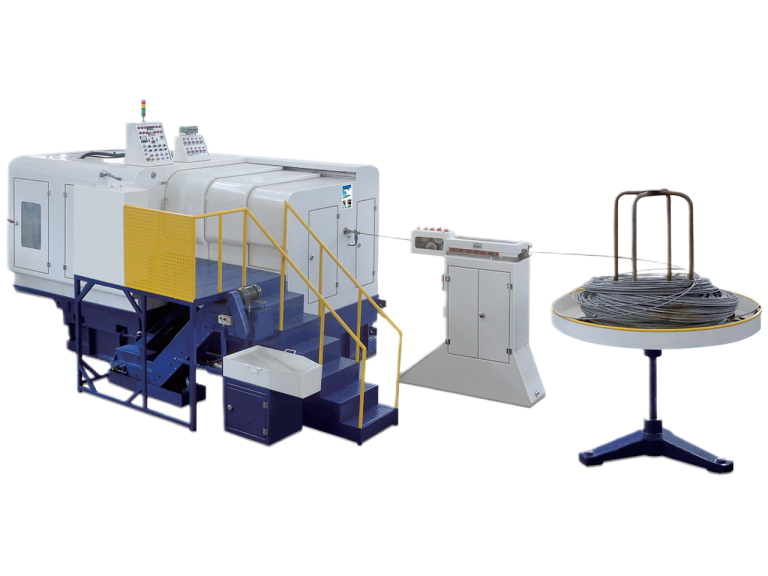
DongRui DBP-148L 8-station heavy-duty part former — built for high-tonnage, large-diameter cold forming with rigid bed and precision transfer.
The DBP-148L 8-station heavy-duty part former is engineered for exactly this class of work. Its eight forming stations provide enough process steps to distribute deformation for M20+ bolts and large industrial fasteners, while the rigid frame protects die alignment under full load. We discuss the relationship between frame rigidity and tooling life in more detail in our article on machine bed rigidity and carbide tooling life.
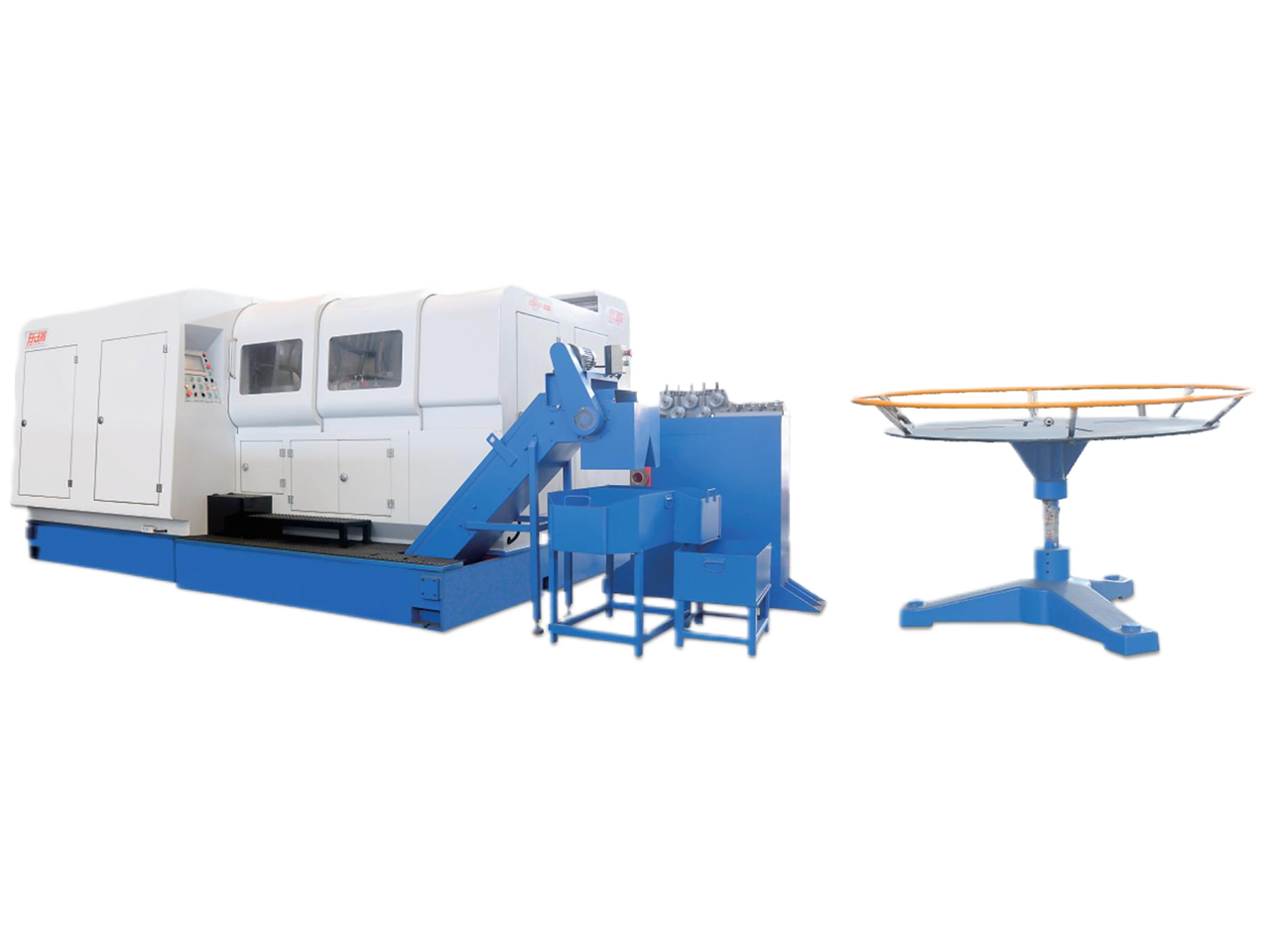
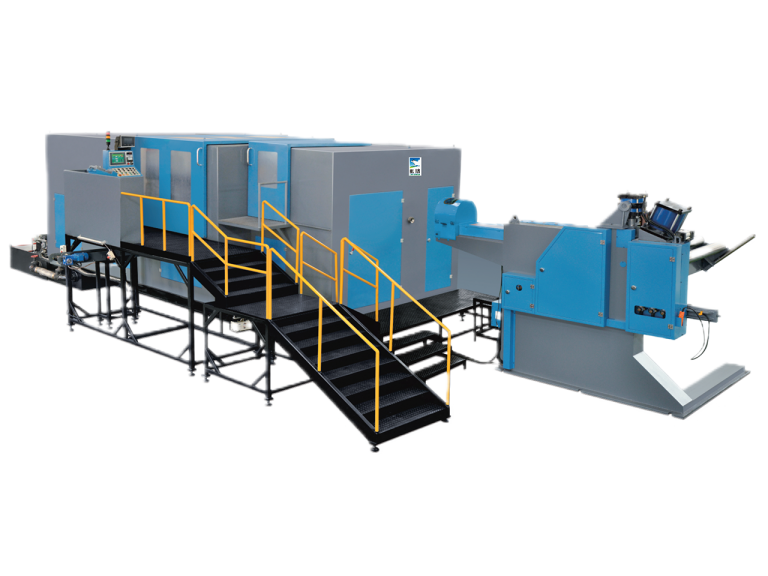
DongRui DBHP-14 automatic cold former — high-precision forming for heavy industrial fasteners with stable high-speed output.
Moving a heavy bolt from hot forging to cold forming is not a direct substitution. The part must be re-engineered for the cold-forming process, and the material, tooling, and quality systems must support it. A practical transition roadmap includes the following stages.
Confirm that the selected steel grade has enough ductility at room temperature to reach the required head size without cracking. Medium-carbon and boron steels are common choices for property class 8.8–12.9 bolts. Incoming wire must meet tight diameter tolerance, low inclusion content, and consistent tensile strength.
Use forming simulation or established reduction-ratio tables to design the sequence of gathers, extrusions, and upsets. The total deformation must be divided so that no station exceeds the safe upset ratio for the material. For large heads, pre-gather stations are usually required.
Large dies require premium materials such as high-speed steel or tungsten carbide inserts, with coatings to reduce galling. Die clearance, punch angle, and entrance radius must be optimized for the alloy and part geometry. See our guide to cold heading die design and maintenance for a deeper look at materials and reconditioning intervals.
Choose a former with enough stations, tonnage, bed rigidity, and transfer precision for the largest bolt in the family. A machine that is undersized for the peak load will produce inconsistent parts and accelerated tooling wear. High-tonnage 8-station formers are the natural starting point for wind-energy bolt sizes.
Run first-article inspections for head fill, shank diameter, concentricity, hardness, and surface defects. Perform fatigue or torque-tension testing against the application spec. Once the process is locked, scale to production and monitor forming load trends for drift.
| Transition step | Key question | Pass criterion |
|---|---|---|
| Material validation | Can the alloy reach the required head volume cold? | No cracks at target upset ratio |
| Station plan | Is deformation split safely across stations? | Per-blow ratio below material limit |
| Tooling trial | Do dies produce net-shape blanks? | Dimensions and surface within print |
| Machine run-off | Can the former hold alignment under load? | CPK ≥ 1.33 on critical dims |
| Application testing | Does the bolt meet fatigue/preload spec? | Pass customer qualification lot |
Automation can accelerate this transition. Plants that combine multi-station formers with auto-feeders and robotic handling reduce labor content and improve repeatability. We covered the integration approach in our article on fastener factory automation with auto-feeders and robotic handlers.
Wind energy and heavy industrial markets are pushing bolt manufacturers toward larger, stronger, more fatigue-resistant fasteners produced at volume. Hot forging and CNC turning can each satisfy part of the requirement, but neither delivers the combination of grain flow, dimensional precision, material yield, and throughput that cold forging offers.
8-station+ high-tonnage cold forgers split heavy deformation across multiple stations, preserve continuous grain flow, and produce net-shape blanks ready for thread rolling. For fastener plants entering or expanding in wind energy, investing in a rigid, high-tonnage multi-station former is the most direct path to meeting modern bolt specifications profitably.
DongRui’s range of heavy-duty part formers and high-tonnage cold formers is built to handle exactly these applications. From the 8-station DBP-148L to high-speed precision models, DongRui machines provide the rigidity, transfer accuracy, and forming force that large industrial bolts demand.
Explore the DongRui DBP-148L 8-Station Heavy-Duty Former
Related reading:
Large 8-station formers typically handle blank diameters from M16–M20 up to M42 or larger, depending on machine tonnage, die size, and material grade. The limiting factor is usually the upset ratio and the machine’s peak forming force, not the station count itself.
Forming tonnage depends on bolt diameter, head volume, material strength, and reduction ratio. Large M30+ bolts in medium-carbon or boron steel commonly require several hundred to over 1,000 metric tons of peak force. Always size the machine above the calculated peak load to protect tooling and maintain repeatability.
Tool life varies with part severity, material cleanliness, lubrication, and die material. Carbide inserts in well-run large-bolt operations can last tens of thousands to hundreds of thousands of parts. Regular inspection, re-coating, and reconditioning intervals should be logged by part number so maintenance can be based on actual wear rather than calendar time.
1. Introduction When evaluating cold forming machines, the first number
Table of Contents Introduction What smart cold forming actually means
1. Introduction When a cold heading machine runs at 350–450
Table of Contents Introduction How to Use This Checklist Daily
 Optimized by Seraphinite Accelerator